
China’s Trade Surplus Soars to Historic High Despite Sharp Drop in U.S. Shipments

China’s Trade Surplus Soars to Historic High Despite Sharp Drop in U.S. Shipments
By
David Goldfarb
Last updated:
January 14, 2026
First Published:
April 25, 2026

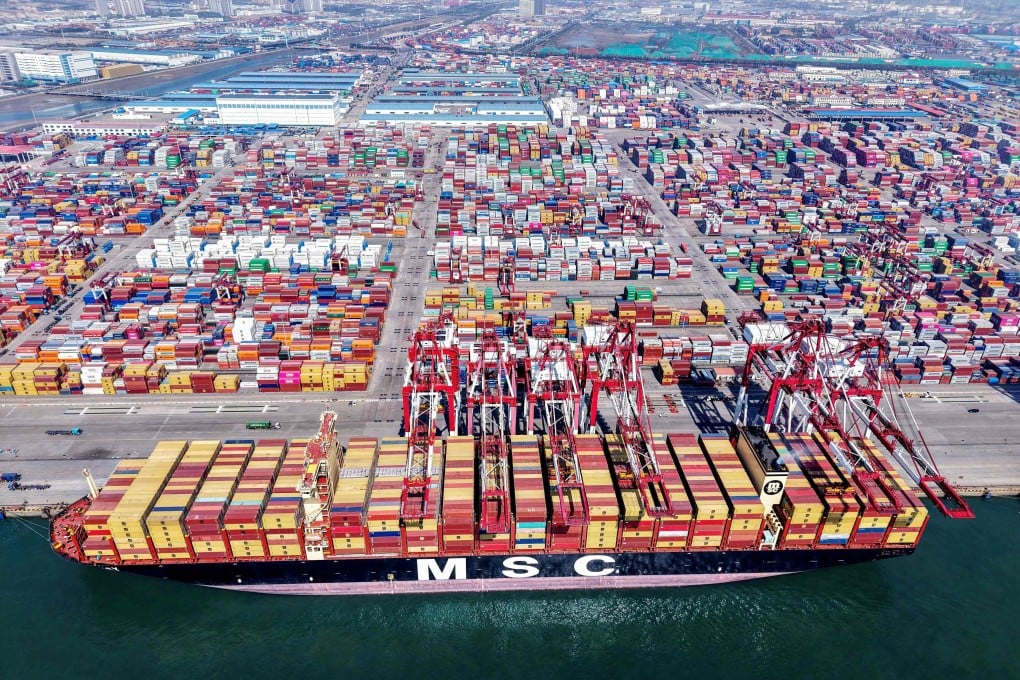
Photo: South China Morning Post
China’s foreign trade performance ended the year on a striking note, with the country posting its largest trade surplus on record even as exports to the United States fell sharply. Robust shipments to alternative markets and a faster-than-expected rebound in imports helped offset deepening strains in U.S. trade ties.
Customs data released Wednesday showed that exports rose 6.6 percent in U.S. dollar terms in December compared with a year earlier, significantly outperforming market expectations for roughly 3 percent growth. The result marked an acceleration from November’s 5.9 percent increase and underscored the resilience of China’s export sector amid global uncertainty.
Imports rebound, signaling selective domestic recovery
Imports also surprised to the upside, rising 5.7 percent year on year in December. That was well above forecasts for sub-1 percent growth and represented the strongest pace since September, when imports climbed 7.4 percent. The pickup suggests modest improvement in demand for raw materials and agricultural goods, even as broader domestic consumption remains under pressure.
For the full year, China’s exports grew 5.5 percent, while imports were broadly flat. This imbalance pushed the annual trade surplus to approximately $1.19 trillion, up about 20 percent from the previous year and the largest surplus ever recorded by the country.
U.S. trade plunges as diversification accelerates
Trade with the United States continued to deteriorate. Shipments to the U.S. fell 30 percent in December from a year earlier, marking the ninth consecutive month of decline. Imports from the U.S. dropped 29 percent over the same period, highlighting the depth of the slowdown in bilateral trade.
Looking at the full-year picture, China’s exports to the U.S. declined by about 20 percent, while imports fell 14.6 percent, reflecting the lingering impact of tariffs, export controls, and shifting supply chains. The data point to a significant reorientation of China’s trade flows away from its largest single-country trading partner.
Lv Daliang, spokesperson for China’s customs authority, reiterated that economic ties between Beijing and Washington should be mutually beneficial, calling for dialogue and negotiation to manage differences and expand cooperation where possible.
Non-U.S. markets drive export strength
As shipments to the U.S. weakened, Chinese exporters increasingly turned to other regions. Exports to the European Union rose 12 percent in December, while shipments to the Association of Southeast Asian Nations increased 11 percent. Imports from the EU jumped 18 percent, while imports from ASEAN declined 5 percent, reflecting uneven demand dynamics across regions.
This rapid expansion into non-U.S. markets has helped cushion China’s export sector but has also fueled concerns among trading partners about growing imbalances. Officials in Europe have warned that surging Chinese exports could intensify competitive pressures on domestic industries.
Global concerns over surplus growth
The ballooning surplus has drawn criticism from international economists and policymakers. Eswar Prasad of the Brookings Institution warned that China’s expanding trade imbalance could prove as disruptive to the global trading system as aggressive tariff policies, particularly if weak domestic demand continues to push excess supply abroad.
IMF Managing Director Kristalina Georgieva echoed similar concerns in December, urging China to reduce its reliance on exports for growth and accelerate reforms aimed at boosting household consumption.
Chinese authorities have acknowledged these risks. In December, officials pledged to expand imports and work toward a more balanced trade structure, though concrete measures have yet to be fully outlined.
Domestic headwinds remain a key risk
Despite strong external trade numbers, China’s nearly $19 trillion economy continues to grapple with deflationary pressures. A prolonged real estate downturn, weak job market conditions, and cautious consumer spending have weighed on domestic demand. Consumer prices were flat over the year, falling short of Beijing’s target of around 2 percent inflation.
Zhiwei Zhang, president and chief economist at Pinpoint Asset Management, expects China’s macro policy stance to remain largely unchanged in the near term. He noted that strong exports are helping offset sluggish domestic demand, while recent easing in U.S.-China trade tensions has reduced immediate external risks.
In October, Beijing and Washington agreed to roll back certain export controls and higher tariffs under a one-year trade truce following talks between President Xi Jinping and President Donald Trump. China also committed to purchasing at least 12 million tons of U.S. soybeans over a two-month period. Official data show China imported 111.8 million tons of soybeans last year, up 6.5 percent from 2024, although December imports rose just 1.3 percent to 8 million tons.
Strategic exports and economic outlook
China’s exports of rare earths surged 32 percent in December to 4,392 tons, and full-year shipments of the critical minerals rose 12.9 percent, highlighting Beijing’s continued dominance in key strategic supply chains.
Investors are now turning their attention to China’s upcoming gross domestic product release, due next Monday. Economists surveyed expect the world’s second-largest economy to have grown around 4.5 percent in the fourth quarter. Beijing has set its full-year growth target for 2025 at approximately 5 percent, a goal that will likely require stronger domestic demand to complement the country’s export-driven momentum.
.webp)
Popular articles



Subscribe to unlock premium content
How Finland Uses Ice Swimming Festivals to Boost Winter Tourism and Local Economies

The Boom of Luxury Personal Libraries Renting Rare Books to the Ultra-Wealthy

Why Bhutan’s Hand-Woven Textiles Are Gaining Global Collector Value

How Finland Uses Ice Swimming Festivals to Boost Winter Tourism and Local Economies
The Boom of Luxury Personal Libraries Renting Rare Books to the Ultra-Wealthy
How Finland Uses Ice Swimming Festivals to Boost Winter Tourism and Local Economies


