China’s Tech Bet Falls Short as Property Slump and Trade Pressures Weigh on Growth

China’s Tech Bet Falls Short as Property Slump and Trade Pressures Weigh on Growth
By
David Goldfarb
Last updated:
January 12, 2026
First Published:
January 12, 2026

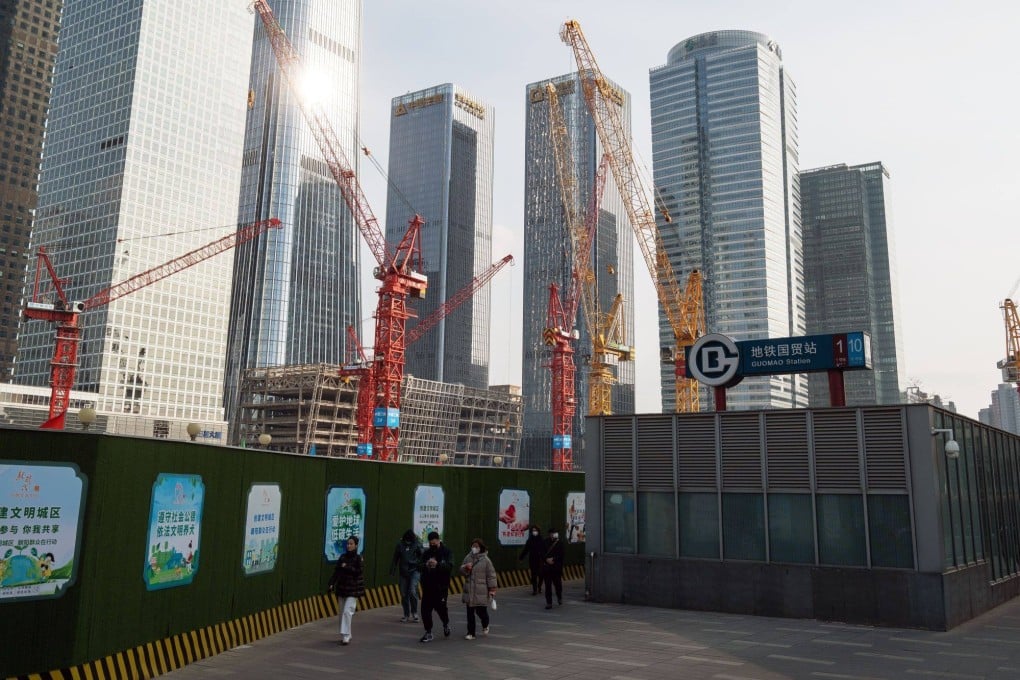
Photo: South China Morning Post
High-Tech Momentum Meets Economic Reality
China’s aggressive push into artificial intelligence, robotics, and electric vehicles has become a central pillar of its economic strategy. However, new analysis suggests that these fast-growing sectors are still far from large enough to offset the drag from a prolonged property downturn, leaving overall growth increasingly exposed to external trade risks.
According to a recent assessment by Rhodium Group, emerging industries added only about 0.8 percentage points to China’s economic output between 2023 and 2025. Over the same period, real estate and other traditional sectors collectively subtracted roughly 6 percentage points from growth. The imbalance highlights the structural challenge facing policymakers as they attempt to transition the economy toward higher-value production.
Why Technology Alone Cannot Carry Growth
Beijing has intensified its focus on technological self-reliance in response to U.S. export controls and broader geopolitical pressure. A new five-year development plan, set to be formalized this year, channels state funding, subsidies, and regulatory support into advanced manufacturing, semiconductors, AI, and automation.
Despite this policy push, analysts argue that the math does not work in the near term. China has aimed to sustain annual GDP growth of around 5 percent. To meet that target, Rhodium estimates that new industries would need to expand roughly sevenfold over the next five years to generate the additional two percentage points of annual investment growth required.
That would imply about 2.8 trillion yuan in new investment this year alone, equivalent to roughly a 120 percent increase compared with 2025 levels. While spending on AI infrastructure and robotics may rise sharply in the short run, analysts caution that few sectors can maintain such explosive growth rates for long.
Electric vehicles, often cited as a success story, may already be approaching maturity. Production growth has begun to slow, and price competition is intensifying both at home and abroad, compressing margins and limiting the sector’s future contribution to growth.
Property Sector Weakness Remains the Core Drag
The most significant headwind continues to be real estate, a sector that once accounted for more than a quarter of China’s economic activity when construction, upstream materials, and related services are included.
New home sales by floor area fell last year to levels last seen in 2009, underscoring the depth of the downturn. Despite a series of targeted measures, policymakers have so far avoided large-scale stimulus aimed directly at reviving property demand.
Some signs of a policy shift have emerged recently, with discussions of stronger support measures ahead of the annual parliamentary meetings in March, where growth and fiscal targets will be finalized. Even so, many economists believe any rebound will be gradual rather than decisive.
Global investment firm KKR estimates that property weakness alone could subtract about 1.2 percentage points from GDP growth this year. Even assuming a relatively strong 2.6 percentage point contribution from digital and technology-driven sectors, overall growth would still land near 4.6 percent, below recent official targets.
Jobs, Automation, and Social Pressure
Beyond growth rates, the composition of China’s expansion raises concerns about employment. High-tech industries tend to be capital-intensive and employ far fewer workers than construction, manufacturing supply chains, and consumer-facing services.
Rhodium’s analysis suggests that an overreliance on automation, combined with China’s already dominant position in global manufacturing, could displace up to 100 million jobs over the next decade. Such a shift would exceed the total labor force of most advanced economies and pose serious challenges for income growth and social stability.
These risks are already visible in labor market data. Urban unemployment has hovered above 5 percent for much of the past year, while youth unemployment remains significantly higher, at roughly three times the overall rate.
Export Dependence and Rising Trade Risks
With domestic demand constrained by weak property markets and cautious consumers, China is increasingly reliant on exports to sustain growth. Analysts argue that even a successful expansion of new industries will not generate enough internal demand on its own.
As a result, Beijing is likely to push harder to gain market share abroad, particularly in sectors such as electric vehicles, batteries, solar equipment, and advanced machinery. This strategy, however, comes with growing risks.
The United States, the European Union, and Mexico have all moved to raise tariffs or tighten trade defenses against Chinese imports, citing concerns over subsidies and unfair competition. As lower-priced Chinese goods flood global markets, the likelihood of additional trade barriers increases.
This dynamic leaves China’s economy more vulnerable to shifts in trade policy and geopolitical relations, particularly at a time when global growth remains uneven.
Beijing’s Long-Term View
Chinese officials maintain that the strategy is designed for long-term resilience rather than short-term growth boosts. Policymakers argue that innovation-led development will ultimately raise productivity and help traditional industries modernize.
Officials have emphasized that sectors such as steel, construction, and real estate must integrate digital tools and advanced manufacturing techniques to remain competitive, rather than relying on debt-fueled expansion.
While that vision may strengthen China’s economy over the next decade, analysts broadly agree that it does little to solve the immediate challenge. In the near term, the gap between high-tech ambition and economic reality leaves growth more fragile and more exposed to global trade tensions than headline investment figures might suggest.
.webp)
Popular articles



Subscribe to unlock premium content
Iceland’s Geothermal Revolution

Bali’s Digital Detox Revolution

Step Into the Future of Art

Iceland’s Geothermal Revolution
Bali’s Digital Detox Revolution
Iceland’s Geothermal Revolution