
China’s Manufacturing Sector Slips Back Into Contraction in November

China’s Manufacturing Sector Slips Back Into Contraction in November
By
Alina Sinclair
Last updated:
December 1, 2025
First Published:
April 25, 2026

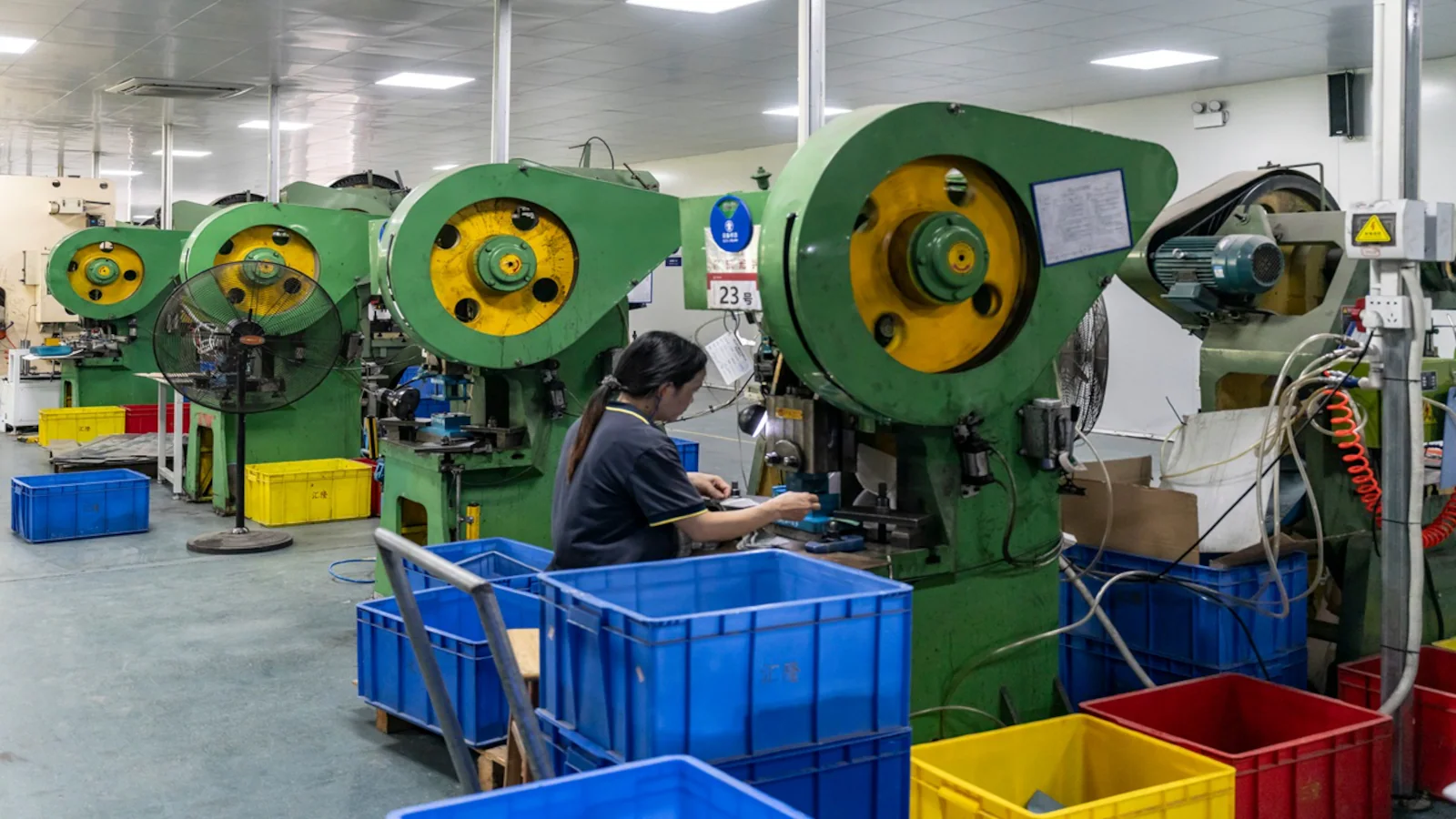
Photo: Moneycontrol
November PMI Shows Unexpected Decline
China’s industrial economy lost momentum in November as fresh private-sector data revealed an unexpected contraction in factory activity. The latest RatingDog China General Manufacturing PMI compiled by S&P Global dropped to 49.9, sliding below the crucial 50 mark and missing market expectations of 50.5 from a Reuters survey. This reversal comes after two months of modest expansion, with readings of 51.2 in September and 50.6 in October.
A PMI above 50 signals expansion while readings below indicate contraction. The dip underscores the ongoing struggle of the world’s second-largest economy to stabilize domestic demand, even as global appetite for Chinese goods shows early signs of improvement.
Export Orders Rise but Domestic Conditions Stall
The RatingDog survey, which tracks 650 manufacturers, often reflects trends among export-focused firms and has historically painted a more upbeat picture than the official government PMI. Yet even this survey recorded stagnation in new orders, with analysts noting that manufacturing production growth essentially halted in November.
One of the few bright spots came from overseas markets. New export orders rose at the fastest pace in eight months, driven by seasonal holiday demand and restocking cycles among international buyers. Despite this, manufacturers scaled back hiring, reduced procurement, and tightened inventory management as domestic orders weakened.
According to Yao Yu, founder of RatingDog, companies are operating with heightened caution. He anticipates only a “weak expansion” in December, contingent on policy support and Beijing’s efforts to secure full-year GDP growth of around 5 percent.
Official PMI Confirms Broader Industrial Strain
China’s official manufacturing PMI, released a day earlier, mirrored the softening outlook. The index came in at 49.2, marking the eighth consecutive month of contraction. Although slightly stronger than October’s 49.0, the reading underscores the prolonged challenge faced by factories struggling with softer home-market demand and the lingering impact of the property downturn.
While the official survey encompasses more than 3,000 companies across industries and regions, both indices align on one critical message: domestic demand remains too weak to drive sustained industrial recovery.
Non-Manufacturing Sectors Also Lose Momentum
China’s services and construction industries added another layer of concern. The official non-manufacturing PMI slipped to 49.5, entering contraction for the first time since December 2022. The downturn was mainly driven by continued weaknesses in real estate, residential services, and infrastructure-linked segments.
This softening points to broad-based cooling across China’s economy as it heads into the final stretch of the year, with momentum fading in both consumption and investment.
Economic Indicators Signal Deeper Slowdown
Recent economic data reinforce the narrative of a broader slowdown.
- Fixed-asset investment fell 1.7 percent in the first 10 months of the year, the weakest performance since early 2020. October alone saw an 11.4 percent year-on-year decline, marking the sharpest drop since the pandemic’s onset.
- Property investment plunged 14.7 percent, deteriorating from the 13.9 percent decline recorded in the previous quarter.
- Industrial output rose 4.9 percent in October, while retail sales growth slowed to 2.9 percent, extending a five-month deceleration streak.
- Exports in October declined 1.1 percent, the first contraction in nearly two years, as front-loaded orders from earlier months tapered off.
Economists caution that these indicators point to GDP growth potentially slowing to below 4.5 percent in the fourth quarter, following the 4.8 percent expansion in Q3.
Policy Outlook and U.S. Trade Easing Provide Limited Relief
The upcoming Politburo meeting and the Central Economic Work Conference are expected to offer clearer guidance on Beijing’s 2025 economic priorities. Analysts widely anticipate additional fiscal support, targeted stimulus for the property sector, and measures to bolster private enterprise confidence.
Meanwhile, trade tensions between China and the United States have temporarily eased after the late-October meeting between President Donald Trump and President Xi Jinping in South Korea. Washington agreed to scale back certain tariffs and suspend port fees for one year, while Beijing pledged steps to address concerns about illicit fentanyl production and export controls.
Despite this truce, large foreign banks caution that it may not immediately translate into a meaningful recovery in demand. Bank of America noted that domestic consumption and private investment remain under pressure, and that deflationary risks will likely persist into next year.
Market Reaction
Financial markets showed mild optimism. Mainland China’s CSI 300 Index rose 0.36 percent, while Hong Kong’s Hang Seng Index gained 0.74 percent. The offshore yuan traded around 7.0711 per dollar, reflecting cautious sentiment but avoiding sharp volatility.
.webp)
Popular articles



Subscribe to unlock premium content
How Finland Uses Ice Swimming Festivals to Boost Winter Tourism and Local Economies

The Boom of Luxury Personal Libraries Renting Rare Books to the Ultra-Wealthy

Why Bhutan’s Hand-Woven Textiles Are Gaining Global Collector Value

How Finland Uses Ice Swimming Festivals to Boost Winter Tourism and Local Economies
The Boom of Luxury Personal Libraries Renting Rare Books to the Ultra-Wealthy
How Finland Uses Ice Swimming Festivals to Boost Winter Tourism and Local Economies


