China’s Manufacturing Sector Picks Up Pace in January as Private PMI Hits Three-Month High

China’s Manufacturing Sector Picks Up Pace in January as Private PMI Hits Three-Month High
By
Augusta Parker
Last updated:
February 2, 2026
First Published:
February 2, 2026

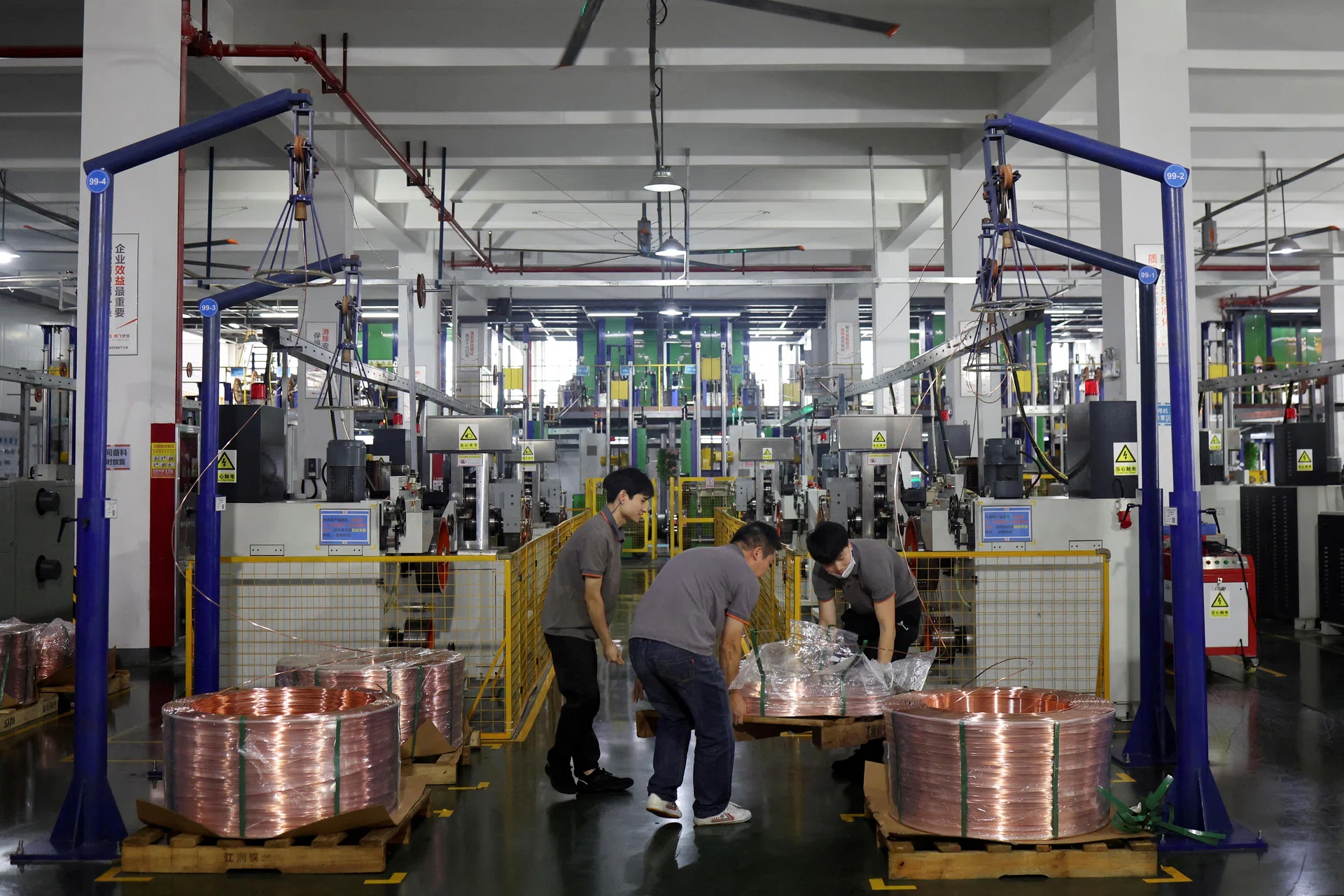
Photo: The Business Times
China’s manufacturing activity accelerated in January, with a closely watched private survey showing factory growth at its strongest level since October, offering a cautiously optimistic signal for the world’s second-largest economy at the start of the year.
The seasonally adjusted RatingDog China General Manufacturing Purchasing Managers’ Index (PMI), compiled by S&P Global, climbed to 50.3 in January from 50.1 in December. The figure matched market expectations and remained above the key 50 threshold that separates expansion from contraction. It also marked the highest reading in three months, following October’s 50.6.
The improvement reflects faster production, steady domestic demand, and a rebound in export orders, as manufacturers ramped up activity and brought shipments forward ahead of the extended Lunar New Year holiday.
Production and Orders Gain Momentum
Factory output expanded at a quicker pace in January as total new orders grew for the eighth consecutive month. Survey respondents reported stronger demand from both local customers and overseas buyers, with Southeast Asia emerging as a particularly bright spot for export growth.
New export orders rebounded after weakening late last year, supported by restocking activity and efforts by Chinese producers to diversify sales away from the U.S. market. Many firms also increased staffing levels to manage higher workloads and clear backlogs, marking one of the stronger hiring readings in recent months.
Analysts say part of the pickup was driven by companies front-loading production before factory shutdowns tied to the Lunar New Year, which this year has been extended to nine days, running from Feb. 15 to Feb. 23. The longer holiday prompted many manufacturers to complete orders early to avoid logistics disruptions.
Rising Costs Start to Bite
Despite stronger headline activity, underlying pressures are building.
Business confidence slipped to a nine-month low, as manufacturers grew increasingly concerned about higher input costs and fragile demand conditions. Corporate expenses rose at their fastest pace in four months, pushing factory-gate prices higher for the first time since November 2024.
Metal prices were a major driver of inflation during the survey period, lifting input costs to their highest level since last September. Producers reported sharp increases in raw material expenses, squeezing margins at a time when pricing power remains limited.
RatingDog founder Yao Yu warned that profitability could remain under strain if cost pressures persist while demand recovery stays uneven.
“Looking ahead, if cost pressures continue while demand growth remains limited, profit margins will stay under pressure,” Yao said.
S&P Global Market Intelligence associate director Jingyi Pan added that heightened geopolitical uncertainty at the start of the year may have encouraged companies to accelerate production, even as they remain cautious about the months ahead.
Private Survey Outperforms Official Data
The private PMI painted a more positive picture than China’s official manufacturing survey released over the weekend.
Data from the National Bureau of Statistics showed factory activity unexpectedly slipping into contraction territory in January, with the official PMI falling to 49.3 from 50.1 in December. Government statisticians attributed the weakness to seasonal factors and softer global demand, noting that some factories temporarily halted production to allow workers to travel home for the Lunar New Year.
The RatingDog survey, which focuses more heavily on smaller and export-oriented firms, has historically shown stronger readings than the official PMI, which covers a broader mix of state-owned enterprises and large domestic manufacturers.
Local media also reported widespread early shutdowns across industrial hubs, particularly in southern China, contributing to the divergence between the two datasets.
Early Snapshot of China’s 2026 Growth Challenges
Together, the PMI readings offer an early look at China’s economic momentum heading into the new year.
China met its official 5% growth target last year, largely supported by resilient exports as manufacturers increased shipments to non-U.S. markets amid higher American tariffs. However, economists continue to flag deep structural challenges.
Retail sales growth slowed to its weakest pace in three years, highlighting fragile consumer confidence. Fixed-asset investment fell 3.8% last year, marking its first annual decline in decades, as a prolonged property downturn and tight local government finances weighed on construction and infrastructure spending.
Deflationary pressures also remain a concern, with producer prices struggling to recover and companies facing ongoing margin compression.
Nomura’s China economist Jing Wang said growth momentum is likely to stay subdued in January, citing fading effects from last year’s consumer goods trade-in programs and persistent stress in the real estate sector.
Policy Support Falls Short, for Now
Chinese authorities rolled out a new set of measures last month aimed at lowering financing costs for households and businesses, encouraging credit demand, and stabilizing economic activity. These steps included guidance to banks on lending rates and targeted support for small enterprises.
Still, economists say the measures are unlikely to be sufficient on their own.
“These policies are far from enough to stabilize growth,” Wang said, adding that Beijing will need to implement much stronger stimulus in the coming months to achieve annual GDP growth above 4.5% in 2026.
The government is expected to announce its official growth target for 2026 at the annual parliamentary session in March, a closely watched event that will provide clearer signals on fiscal spending, infrastructure investment, and broader economic priorities.
Cautious Optimism Amid Structural Headwinds
While January’s private PMI suggests China’s factories are regaining some momentum, rising costs, weak confidence, and long-running property sector woes continue to cast a shadow over the recovery.
For now, manufacturers are benefiting from export diversification and pre-holiday production boosts. But without stronger domestic demand and more decisive policy support, economists warn that China’s industrial rebound could prove fragile in the months ahead.
.webp)
Popular articles



Subscribe to unlock premium content
Zara’s Hyper-Fast Fashion Supply Chain Is Changing Global Retail

The Rise of Apple Stores as Experiential Brand Centers Worldwide

Boutique Eco-Lodges in Costa Rica Redefining Ultra-Luxury Travel

Zara’s Hyper-Fast Fashion Supply Chain Is Changing Global Retail
The Rise of Apple Stores as Experiential Brand Centers Worldwide
Zara’s Hyper-Fast Fashion Supply Chain Is Changing Global Retail