
China’s Manufacturing Rebounds Strongly, Posting Fastest Growth in 12 Months

China’s Manufacturing Rebounds Strongly, Posting Fastest Growth in 12 Months
By
Leah Rosenfeld
Last updated:
March 31, 2026
First Published:
April 25, 2026

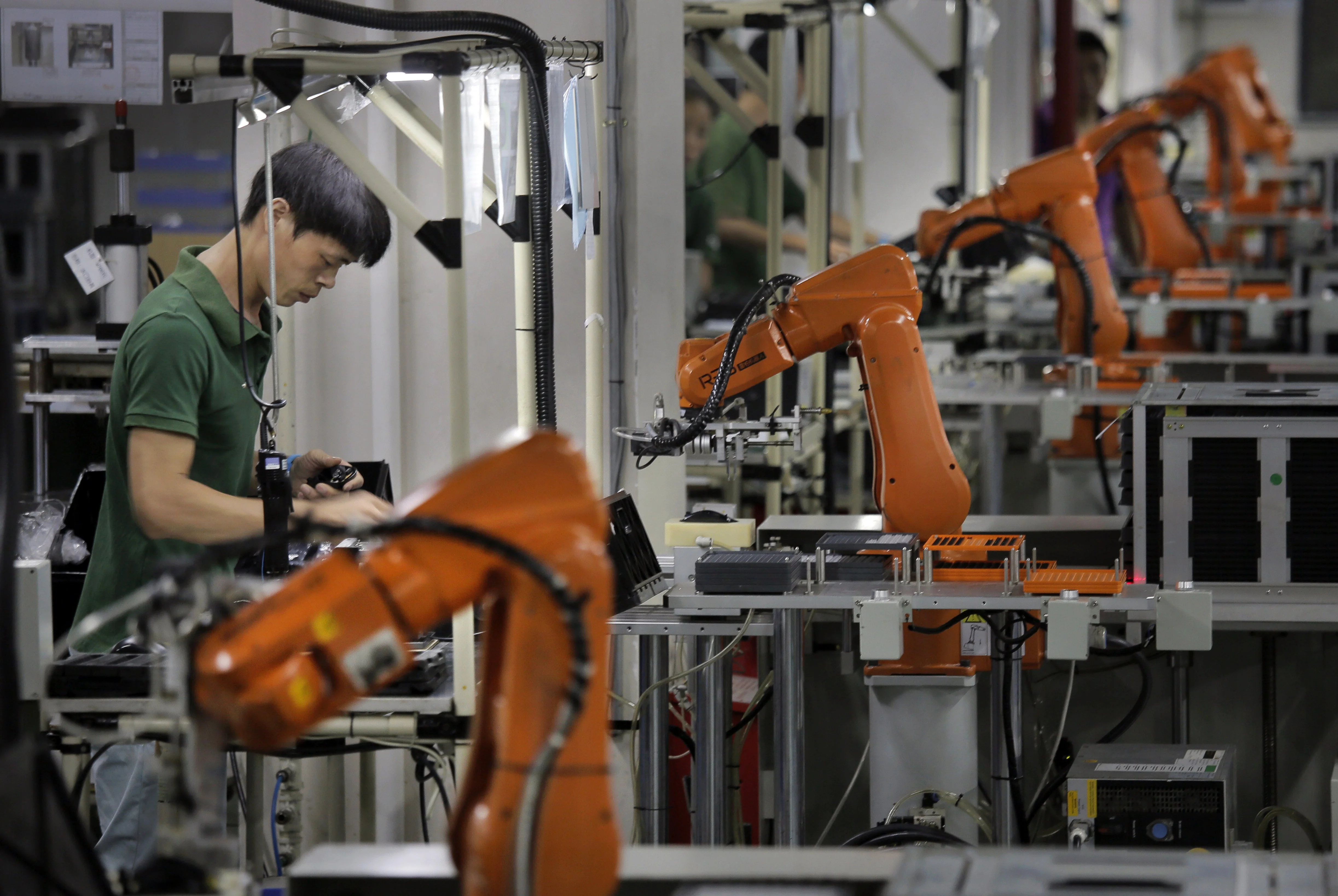
Photo: South China Morning Post
Manufacturing Sector Regains Momentum
China’s industrial engine showed renewed strength in March, with factory activity expanding at its fastest pace in a year and outperforming market expectations. The latest data signals a meaningful recovery after two consecutive months of contraction, offering a positive sign for the world’s second-largest economy.
According to the National Bureau of Statistics, the official Manufacturing Purchasing Managers’ Index (PMI) rose to 50.4 in March, up from 49.0 in February and 49.3 in January. The reading also exceeded economist forecasts of 50.1, indicating stronger-than-anticipated industrial activity.
A PMI reading above 50 reflects expansion, while any figure below that threshold signals contraction, making March’s data a clear turning point for China’s manufacturing sector.
Production and Orders Drive the Recovery
The rebound was largely fueled by a pickup in production and new orders, both of which moved back into expansion territory. Factories ramped up operations following a slowdown linked to the extended Lunar New Year holiday period in February.
Industrial output saw a noticeable acceleration as manufacturers rushed to fulfill both domestic and international demand. Export orders, in particular, showed strong momentum, supported by rising demand from regions such as Southeast Asia, Europe, and parts of Africa.
However, not all components of the PMI reflected strength. Sub-indexes for employment, raw material inventories, and supplier delivery times remained in contraction, highlighting underlying structural challenges within the sector.
Services Sector Also Edges Back into Growth
China’s broader economic activity also showed modest improvement beyond manufacturing. The non-manufacturing PMI, which tracks services sectors such as tourism, retail, and construction, rose to 50.1 in March from 49.5 in February.
This slight expansion suggests that domestic consumption and service-related industries are gradually stabilizing, although the pace of recovery remains uneven.
Export Strength Supports Economic Recovery
One of the key drivers behind the manufacturing rebound has been a surge in exports. In the first two months of the year, China’s exports jumped by 21.8% compared to the same period last year, significantly outperforming expectations.
Strong demand from emerging markets and Europe helped offset weaker shipments to the United States, reflecting a shift in China’s trade dynamics. Increased global demand for products such as solar panels, batteries, and industrial equipment has further supported factory output.
This export resilience has played a crucial role in stabilizing China’s manufacturing base amid broader global uncertainties.
Rising Costs and Geopolitical Risks Persist
Despite the positive headline numbers, mounting cost pressures remain a concern for manufacturers. Ongoing tensions in the Middle East have driven up shipping costs and the price of key imported commodities, including crude oil and industrial chemicals.
Input cost indices rose sharply, with raw material prices climbing to 63.9 and factory-gate prices reaching 55.4, reflecting increasing inflationary pressure within the production cycle.
These rising costs are squeezing margins for manufacturers, particularly smaller firms that are more sensitive to fluctuations in energy and logistics expenses.
Short-Term Optimism, Long-Term Uncertainty
Many businesses remain cautiously optimistic, expecting current supply disruptions to ease in the coming weeks. Diplomatic developments, including a potential meeting between Donald Trump and Xi Jinping, are being closely watched as a possible catalyst for stabilizing trade and geopolitical tensions.
However, analysts warn that if disruptions persist beyond the near term, the impact on production costs and supply chains could intensify, potentially reversing recent gains in manufacturing activity.
Outlook for China’s Industrial Growth
Looking ahead, China’s manufacturing sector appears to be on a recovery path, supported by strong export demand and post-holiday production normalization. However, the sustainability of this growth will depend heavily on external factors, including global demand conditions, geopolitical stability, and input cost trends.
A separate private-sector PMI survey is expected to show continued expansion, though at a slightly slower pace, indicating that while momentum is building, challenges remain.
For now, March’s data offers a clear signal that China’s factories are regaining their footing—but the road ahead remains complex and highly dependent on global economic conditions.
.webp)
Popular articles



Subscribe to unlock premium content
AI-Curated Luxury Shopping Experiences Transform the Market

Limited-Run Anime Originals Redefining Global Entertainment

Micro-Vertical Farming Becomes Corporate Gold
.png)
AI-Curated Luxury Shopping Experiences Transform the Market
Limited-Run Anime Originals Redefining Global Entertainment
AI-Curated Luxury Shopping Experiences Transform the Market


