China’s Industrial Profit Growth Surges in April as Government Measures Offset Tariff Pressures

China’s Industrial Profit Growth Surges in April as Government Measures Offset Tariff Pressures
By
Leah Rosenfeld
Last updated:
May 27, 2025
First Published:
August 3, 2025

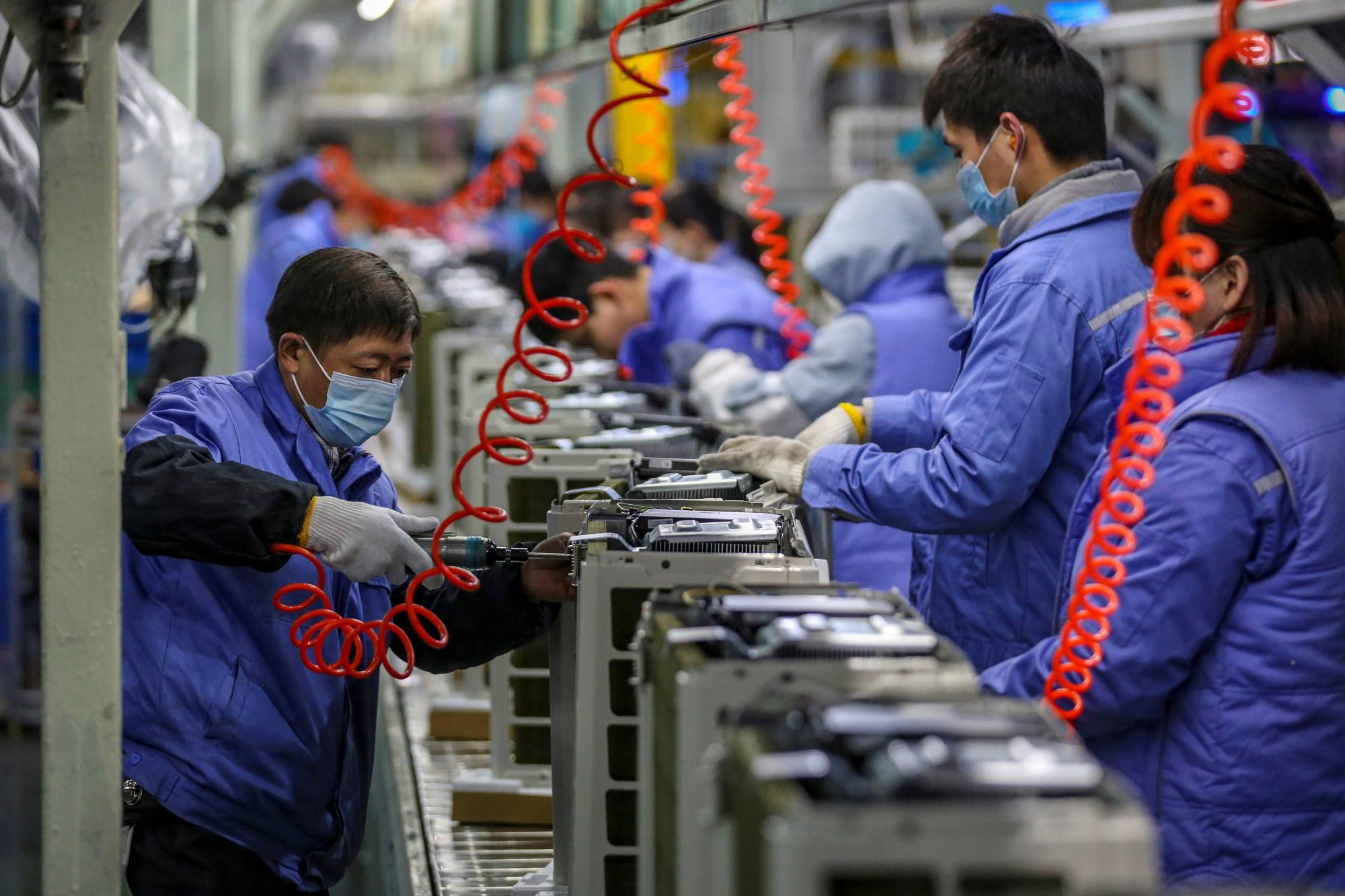
Photo: The Japan Times
China’s Industrial Sector Gains Momentum in April Amid Tariff Headwinds
China’s industrial landscape showed surprising resilience in April 2025, with profits at major industrial firms jumping 3% year-over-year — a notable improvement from March’s 2.6% growth. Despite aggressive U.S. tariffs and lingering deflationary concerns, Beijing’s supportive policies played a critical role in cushioning the impact on domestic manufacturers.
According to China’s National Bureau of Statistics (NBS), cumulative industrial profits in the first four months of the year rose 1.4% compared to the same period in 2024. The uptick was largely driven by gains in high-tech and equipment manufacturing, sectors prioritized by China’s ongoing economic modernization efforts.
Trade Tensions: Tariffs Still Loom, but Policy Support Kicks In
The boost in profits comes against the backdrop of a still-tense trade environment. Just last month, the Trump administration escalated tariffs on Chinese imports to a peak of 145%, prompting retaliatory measures from Beijing. However, a tentative trade truce reached in Geneva earlier this month has since eased those tensions, bringing average U.S. tariffs on Chinese goods down to 51.1%, while Chinese tariffs on U.S. imports now average 32.6%, according to data from the Peterson Institute for International Economics.
Despite this temporary reprieve, uncertainty remains high.
“Manufacturers are navigating a much more volatile global environment,” said Lynn Song, chief economist for Greater China at ING. “That profits still managed to grow reflects the effectiveness of Beijing’s targeted stimulus and policy safeguards.”
Key Sectors Driving the Profit Surge
- High-Tech Manufacturing: Profits in this sector rose 9% year-on-year during January to April. Sub-sectors like biopharmaceuticals and aircraft manufacturing saw particularly strong gains.
- Consumer Electronics: Thanks to a government-backed program incentivizing the trade-in of old appliances, profits among household appliance manufacturers jumped over 15%.
- Equipment Manufacturing: This traditionally export-heavy sector benefited from domestic demand and rose steadily over the four-month period.
On the flip side, not all sectors shared in the gains.
Sectors Under Pressure
- Mining: Profits plunged 26.8% year-on-year, reflecting global commodity price instability and reduced demand.
- Auto Industry: Hampered by severe price wars and shifting demand, profits in the automobile sector fell 5.1%.
- Apparel and Textiles: As Western demand shifted due to tariff hikes, profits in clothing and textile manufacturing dropped 12.7%.
Meanwhile, the broader industrial output grew 6.1% in April, indicating expansion across most production lines. However, retail sales slowed to 5.1%, highlighting ongoing challenges in balancing supply and demand.
Private Sector and Ownership Breakdown
The breakdown by ownership further reveals where momentum is strongest:
- State-Owned Firms: Profits fell 4.4% year-over-year in the first four months, underscoring deeper inefficiencies and structural challenges in these legacy entities.
- Private Firms: Benefiting most from Beijing’s pro-business policies, private industrial firms saw profits increase by 4.3%.
- Foreign-Invested Enterprises: These firms posted a more modest 2.5% gain, constrained somewhat by regulatory uncertainty and global demand shifts.
“Policy efforts to reduce arrears owed to small businesses and ensure timely payments have started to show results,” said Bruce Pang, adjunct associate professor at CUHK Business School.
Economic Outlook: Bracing for Uncertainty
The improved figures are encouraging, but analysts urge caution. Weining Yu, an NBS statistician, warned that “demand weakness and deflationary pressures persist, while geopolitical tensions continue to cloud the external outlook.”
China’s industrial profit growth in Q1 2025 had already reversed a streak of declines seen since mid-2024, rising 0.8% year-on-year. April’s stronger showing suggests Beijing’s strategy is yielding results — at least in the short term.
However, the road ahead remains uncertain as global markets adapt to new trade dynamics, and China seeks to maintain its industrial engine amidst evolving geopolitical and economic conditions.

Popular articles


Subscribe to unlock premium content
The Rise of Ultra-Luxury Wilderness Retreats in Siberia for High-Net-Worth Investors

Remote Himalayan Villages Transforming Ancient Traditions into Lucrative Wellness Ventures

The New Frontier of Investment in African Artisan Mining Communities

The Rise of Ultra-Luxury Wilderness Retreats in Siberia for High-Net-Worth Investors
Remote Himalayan Villages Transforming Ancient Traditions into Lucrative Wellness Ventures
The Rise of Ultra-Luxury Wilderness Retreats in Siberia for High-Net-Worth Investors