China’s Factories Return to Growth as Manufacturing Rebounds After Months of Contraction

China’s Factories Return to Growth as Manufacturing Rebounds After Months of Contraction
By
Junia Wells
Last updated:
December 31, 2025
First Published:
December 31, 2025

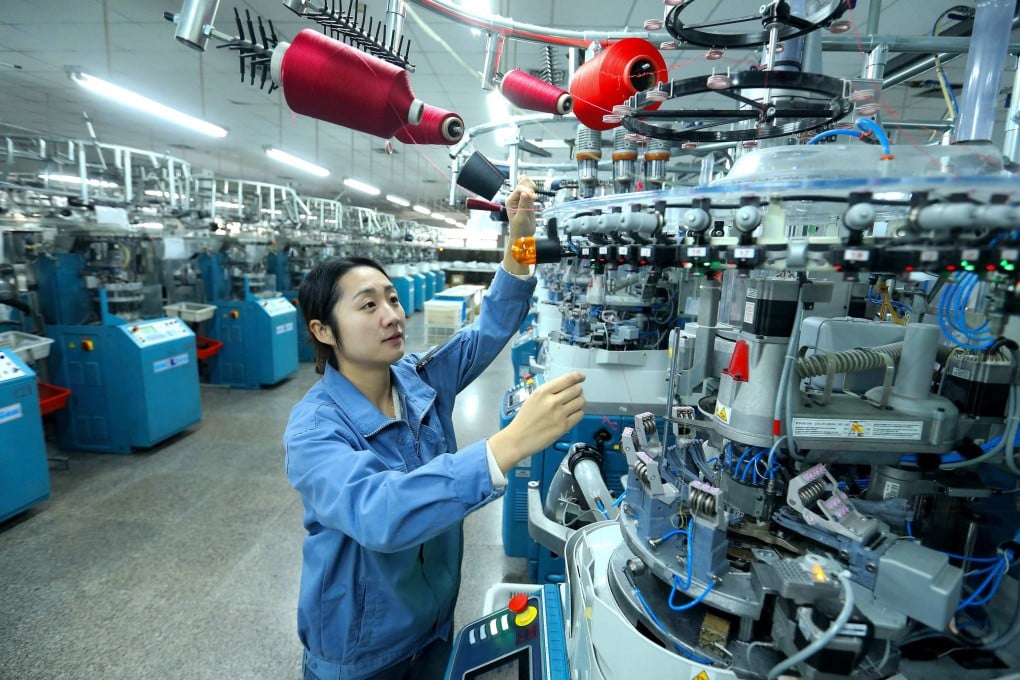
Photo: South China Morning Post
Manufacturing Breaks a Nine Month Slump
China’s manufacturing sector showed signs of recovery in December, with factory activity returning to expansion after nine consecutive months of contraction. Official data released Wednesday indicates that production and demand stabilized toward the end of the year, offering a modest boost to sentiment around the world’s second largest economy.
The official manufacturing purchasing managers index rose to 50.1 in December, up from 49.2 in November and well above market expectations of 49.2. Readings above the 50 mark indicate expansion, making this the first positive print since March.
Broader Economic Activity Also Improves
The rebound was not limited to factories alone. The official composite PMI, which combines manufacturing and services, climbed to 50.7 from 49.7 in November, pointing to a wider improvement in economic activity.
China’s non manufacturing PMI, covering services and construction, also moved back into expansion territory, rising to 50.2 from 49.5. Together, the figures suggest that both production and services benefited from firmer demand at the end of the year.
According to the National Bureau of Statistics, new orders increased notably in December, supporting higher output and signaling renewed momentum on both the supply and demand sides of manufacturing.
Private Data Confirms the Trend
Independent indicators echoed the official figures. A separate manufacturing PMI compiled by private research firm RatingDog rose to 50.1 in December from 49.9 in November, beating expectations of 49.8.
RatingDog founder Yao Yu said the data confirms that manufacturing has returned to expansion, with total new orders rising for a seventh straight month. He attributed the improvement to stronger domestic product launches, ongoing business development, and a gradual pickup in production activity.
However, Yao cautioned that while firms remain cautiously optimistic about 2026, overall confidence has softened and remains below long term historical averages.
Large Companies Lead the Recovery
The rebound was uneven across the corporate landscape. Large enterprises were the primary drivers of growth, with their PMI jumping to 50.8, an increase of 1.5 percentage points from the previous month.
In contrast, conditions for smaller businesses remained challenging. The PMI for medium sized firms edged up to 49.8, still below expansion levels, while small enterprises saw activity weaken further, with their index falling to 48.6, down 0.5 points from November.
The divergence highlights ongoing structural pressure on smaller manufacturers, including tighter financing conditions and weaker pricing power.
Market Reaction Remains Cautious
Financial markets responded cautiously to the data. Hong Kong’s Hang Seng Index declined 0.83 percent, while mainland China’s CSI 300 rose 0.33 percent, reflecting mixed investor sentiment about the durability of the recovery.
The data follows a decision by China’s central bank earlier in the week to keep key loan prime rates unchanged, despite persistent weakness in the property sector and softer than expected recent economic indicators.
Policy Challenges Still Loom
Recent figures on retail sales, industrial output, and fixed asset investment have all undershot expectations, underscoring the fragility of China’s recovery. The prolonged downturn in real estate continues to weigh heavily on growth, consumption, and business confidence.
Despite these headwinds, some economists see the December PMI as an encouraging signal. Hao Zhou, chief economist at Guotai Junan International, described the reading as a positive surprise, suggesting the economy is moving in the right direction.
According to Zhou, while markets remain concerned about property, equities, and consumer demand, the latest data indicates that underlying momentum is holding up better than feared.
Outlook for the New Year
China’s manufacturing rebound does not mark a full turnaround, but it does suggest that stimulus measures, domestic demand support, and easing pressure in supply chains are beginning to have an effect. Whether this momentum can be sustained into the new year will depend on policy support, global demand conditions, and progress in stabilizing the property sector.
For now, December’s expansion offers a rare bright spot and a tentative sign that the manufacturing downturn may have reached its bottom.
.webp)
Popular articles



Subscribe to unlock premium content
Fermenting Success in South Korea

Hidden Literary Treasures in the Age of Giants

Whispers of Wealth in Japan

Fermenting Success in South Korea
Hidden Literary Treasures in the Age of Giants
Fermenting Success in South Korea