China’s Export Engine Roars Ahead as AI Demand and U.S. Orders Fuel Strongest Trade Growth in Years

China’s Export Engine Roars Ahead as AI Demand and U.S. Orders Fuel Strongest Trade Growth in Years
By
Augusta Parker
Last updated:
June 9, 2026
First Published:
June 9, 2026

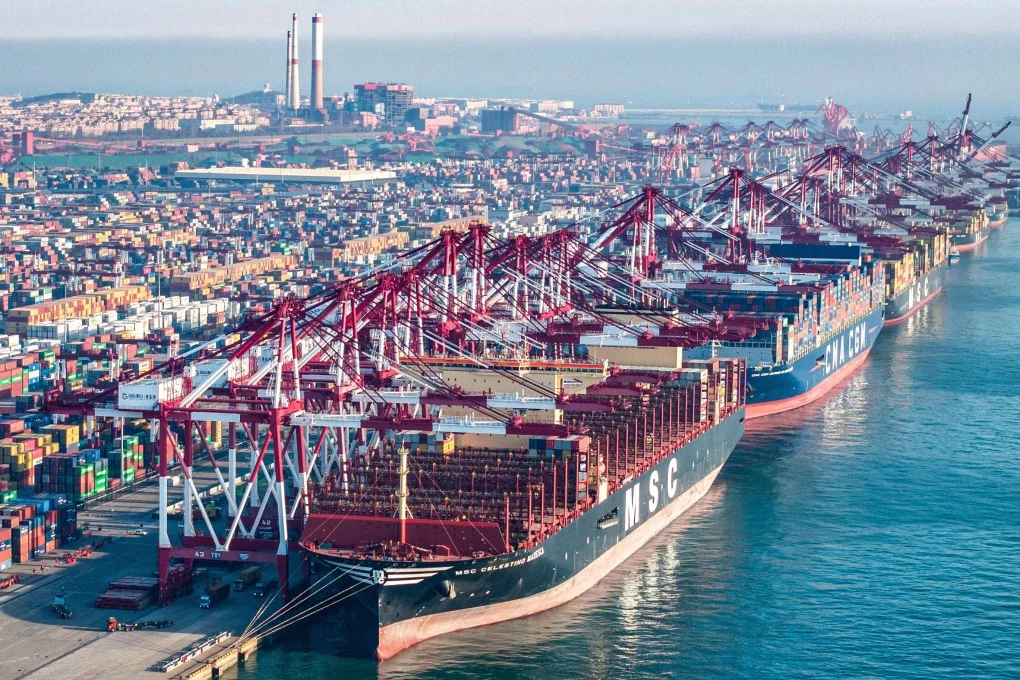
Photo: South China Morning Post
China’s trade sector delivered another strong performance in May, with exports significantly outperforming expectations and shipments to the United States recording their fastest growth in more than five years. The latest figures highlight the resilience of the world’s second-largest economy as booming demand for artificial intelligence technologies, semiconductors, and clean-energy products offsets mounting global uncertainties.
The stronger-than-expected trade data comes at a critical time for Beijing, as policymakers navigate slowing domestic demand, a struggling property sector, and ongoing geopolitical tensions. While parts of the economy continue to weaken, exports remain one of China’s most reliable growth engines.
Exports Accelerate Beyond Expectations
According to newly released customs data, China’s exports rose 19.4% year-over-year in May in U.S. dollar terms, accelerating from April’s 14.1% increase and comfortably surpassing economists’ forecasts of around 15%.
The improvement reflects strong global demand for Chinese-made technology products, industrial equipment, renewable-energy solutions, and advanced electronics. Despite concerns over slowing global growth and persistent trade tensions, overseas buyers continued to increase purchases from Chinese manufacturers.
The export performance demonstrates how China’s manufacturing sector has adapted to changing global demand patterns, increasingly focusing on higher-value products rather than relying solely on traditional low-cost exports.
U.S.-Bound Shipments Post Their Biggest Jump Since 2021
One of the most notable developments in the latest data was the sharp rebound in exports to the United States.
Chinese shipments to the U.S. surged 35.4% compared with a year earlier, marking the strongest annual growth rate since March 2021. The increase extends a recovery that began earlier this year after exports to the American market suffered through prolonged declines caused by tariffs, inventory adjustments, and weaker consumer demand.
The rebound suggests that many American businesses have resumed sourcing products from China despite ongoing political tensions and trade restrictions. Analysts note that competitive pricing, manufacturing scale, and improving supply-chain efficiency continue to make Chinese suppliers difficult to replace in many industries.
In addition, China's tariff disadvantage relative to several Southeast Asian manufacturing hubs has narrowed, improving the competitiveness of Chinese exports in key global markets.
AI and Semiconductor Boom Powers Trade Growth
A major driver behind China’s export surge has been the explosive growth in artificial intelligence infrastructure and semiconductor-related demand.
Exports of integrated circuits climbed 32% year-over-year to nearly 40 billion units in May, reflecting robust demand from technology companies worldwide. In value terms, high-tech exports surged approximately 50% compared with the same month last year.
At the same time, imports of advanced technology products rose 47%, highlighting China’s continued efforts to secure critical components needed for manufacturing and AI development.
The rapid expansion of AI-related industries has created new opportunities for Chinese exporters, particularly those involved in semiconductor packaging, electronic components, data-center equipment, industrial automation systems, and advanced computing technologies.
Industry experts expect AI investment to remain a significant catalyst for trade growth throughout the remainder of the year as businesses and governments worldwide accelerate spending on next-generation technology infrastructure.
Green Energy Products Continue to Lead Global Demand
Beyond artificial intelligence, renewable-energy products remain another major source of export momentum.
Electric vehicles, lithium-ion batteries, solar panels, energy storage systems, and related technologies continue to attract strong international demand as countries invest heavily in energy transition initiatives.
China remains the world's largest producer of many clean-energy products, giving its manufacturers a significant advantage as governments and corporations pursue carbon reduction goals.
The combination of AI technologies and green-energy exports has created two powerful growth engines that are helping offset weakness in more traditional sectors.
Imports Surge as Businesses Rebuild Inventories
China’s imports also expanded at a rapid pace, increasing 27.4% year-over-year in May. The figure exceeded market expectations and accelerated from April’s already strong 25.3% growth.
The rise in imports reflects growing purchases of semiconductors, industrial materials, precious metals, and other strategic commodities.
As a result, China’s trade surplus widened to approximately $105.4 billion during the month, underscoring the continued strength of the country's external sector.
During the first five months of the year, imports rose 24.5%, outpacing export growth of 15.5%. While this narrowed the overall trade surplus compared with the previous year, economists caution that much of the increase was concentrated in a handful of categories rather than signaling broad-based domestic demand recovery.
Stockpiling Ahead of Potential Energy Disruptions
Global geopolitical tensions have also influenced trade patterns.
The conflict in the Middle East has prompted many businesses around the world to accelerate purchases and build inventories amid concerns about potential disruptions to energy supplies and shipping routes.
Companies have rushed to secure goods before transportation costs and commodity prices rise further, providing additional support for Chinese exports.
This stockpiling activity has benefited manufacturers across sectors ranging from electronics and machinery to renewable-energy equipment.
However, economists warn that this demand boost could prove temporary. Once inventory levels normalize, trade growth may slow if domestic consumption and investment fail to strengthen.
Domestic Economy Still Faces Significant Challenges
Despite the strong trade performance, China's broader economic outlook remains mixed.
Several key indicators have pointed to slowing momentum since the beginning of the second quarter. Industrial production growth has moderated, retail spending remains weak, and consumer confidence has struggled to recover fully following years of economic uncertainty.
Manufacturing activity has also softened, with official purchasing manager surveys showing growth hovering near the threshold between expansion and contraction.
Economists increasingly describe China's economy as operating on a "two-speed" model. Manufacturing, exports, and advanced technology sectors continue to perform strongly, while consumer spending, housing markets, and private-sector confidence remain under pressure.
Weak Consumer Demand Remains a Concern
One of the biggest challenges facing policymakers is the persistent weakness in domestic consumption.
Retail sales growth has slowed considerably compared with previous years, and many economists expect consumer spending to remain subdued as households continue to prioritize savings over discretionary purchases.
A softer labor market has further complicated the situation. While factories are producing more goods, increased automation and productivity improvements mean manufacturing output is rising without generating substantial new employment opportunities.
As a result, wage growth remains uneven, limiting the ability of consumer spending to become a major driver of economic expansion.
Strong Yuan Creates New Pressure for Exporters
Chinese exporters are also facing a new challenge from currency movements.
The renminbi has strengthened against the U.S. dollar throughout the year, with both offshore and onshore exchange rates appreciating by roughly 3%.
A stronger currency typically reduces the competitiveness of exports by making Chinese products more expensive in foreign markets. It can also create valuation losses for companies holding large amounts of dollar-denominated assets.
So far, strong external demand has outweighed these pressures, but continued currency appreciation could become a headwind if global demand begins to weaken.
Rising Commodity Costs Could Ease Deflation Risks
Another important development is the impact of higher global commodity prices.
For several years, China has struggled with weak pricing power and deflationary pressures. Rising energy and raw-material costs linked to geopolitical disruptions may help reverse that trend by pushing producer prices higher.
Economists expect producer inflation to reach its highest level in several years, while consumer inflation is also forecast to rise modestly.
Although higher input costs create challenges for businesses, they could help stabilize prices across the economy and reduce concerns about prolonged deflation.
Outlook: Exports Remain China’s Bright Spot
Looking ahead, exports are expected to remain one of the strongest pillars supporting China’s economy. Continued investment in artificial intelligence, semiconductors, renewable energy, and advanced manufacturing should provide ongoing demand for Chinese goods.
However, economists caution that long-term economic stability will ultimately require stronger domestic consumption, healthier labor market conditions, and a more balanced growth model.
For now, the latest trade figures reinforce China’s position as a critical player in global supply chains and demonstrate how technology-driven exports are helping sustain economic growth amid an increasingly uncertain global environment.
.webp)
Popular articles



Subscribe to unlock premium content
Boutique Creative Studios Turning Local Art Movements into Ad Campaigns

Inside London’s Private Wealth Advisory Firms Catering to Millennial Investors

How Boutique Safari Camps in Kenya Are Creating Premium Eco Experiences

Boutique Creative Studios Turning Local Art Movements into Ad Campaigns
Inside London’s Private Wealth Advisory Firms Catering to Millennial Investors
Boutique Creative Studios Turning Local Art Movements into Ad Campaigns