China’s EV Market Heads Into a High Stakes Shakeout in 2026

China’s EV Market Heads Into a High Stakes Shakeout in 2026
By
Calder Monroe
Last updated:
December 30, 2025
First Published:
December 30, 2025

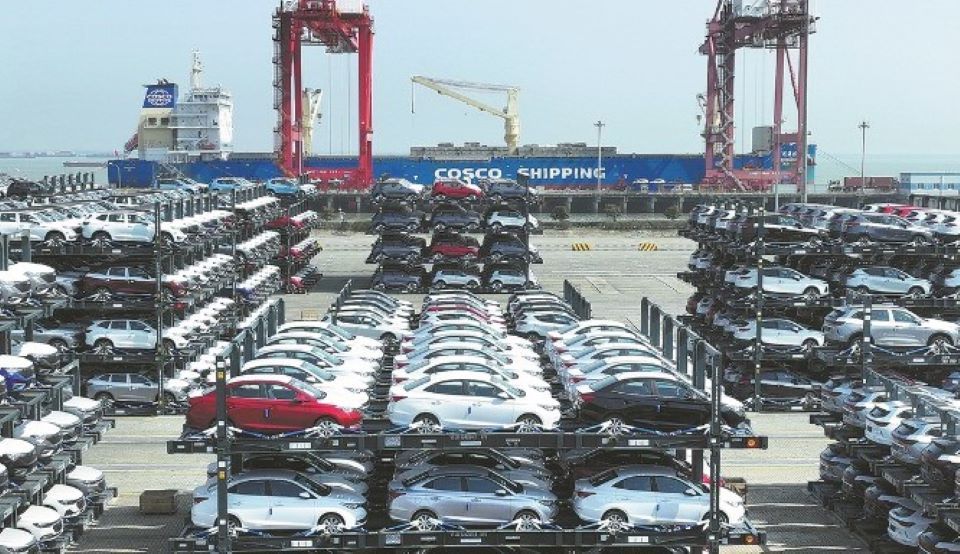
Photo: The Asia Live
A Booming Market Loses Momentum
China’s new energy vehicle sector, once defined by breakneck growth and optimistic forecasts, is entering a far more difficult phase. Analysts expect overall EV growth to slow sharply in 2026 as domestic demand approaches saturation and competition intensifies across every price segment. What was once a volume driven expansion is now becoming a margin squeezing contest, with weaker players increasingly at risk of being pushed out.
Sales data already signals this shift. The China Passenger Car Association reports that EV sales momentum softened through 2025, ending the year on a notably weaker note. Even market leaders are feeling the strain, reinforcing the view that the industry is transitioning from rapid expansion to consolidation and survival.
Market Leaders Are Not Immune
Pressure is visible even among the biggest names. Tesla’s China sales declined 7.4 percent year over year between January and November, while BYD, the country’s dominant EV manufacturer, posted a 5.1 percent drop over the same period. The situation worsened in November alone, when BYD’s passenger vehicle sales fell 26.5 percent compared with a year earlier.
In contrast, newer entrants and tech aligned brands showed explosive growth. Vehicles integrating Huawei software and models launched by Xiaomi recorded year over year sales increases of more than 90 percent, highlighting how quickly consumer preferences can shift toward newer ecosystems and smarter in car technology.
Early Chinese EV startups such as Nio, Xpeng, and Li Auto continue to improve deliveries, yet they failed to rank among the top ten sellers for the month, underscoring how unforgiving the market has become.
Consolidation Accelerates Across the Industry
China’s EV market is now far more concentrated than it was just a few years ago. The top ten manufacturers account for roughly 95 percent of total new energy vehicle sales, up from around 60 to 70 percent only two to three years earlier. Smaller brands are rapidly losing relevance as scale, brand recognition, and price competitiveness become decisive factors.
Industry analysts warn that further consolidation is inevitable. Consumers may be price sensitive, but brand familiarity still matters. Unknown or lightly established manufacturers are struggling to attract buyers, regardless of discounts.
Price Wars Redefine the Competitive Landscape
The intensity of the price war is unprecedented. Discounts have become so extreme that Chinese automotive platforms now rank vehicles by price reductions. Premium electric models have seen cuts of hundreds of thousands of yuan, with some luxury EVs discounted by over 400,000 yuan, while mid range competitors are routinely slashing prices by more than 100,000 yuan.
UBS analysts expect these price battles to continue for several years, particularly as government support eases. Beijing plans to reintroduce purchase taxes and gradually reduce trade in subsidies, measures that are likely to further weigh on demand growth. Forecasts suggest China’s EV sales growth rate could fall to around 10 percent in 2026, roughly half the pace seen in 2025.
Domestic Saturation Is Now a Reality
The slowdown is not merely cyclical. China’s EV market is approaching full penetration in major cities. New energy vehicles accounted for nearly 60 percent of all new passenger cars sold in November, a level that leaves limited room for incremental growth without replacing existing vehicles.
This saturation is forcing automakers to rethink strategies that once relied on rapid domestic volume expansion. With demand stabilizing, competition is shifting toward cost efficiency, technology differentiation, and international scale.
Overseas Expansion Becomes a Strategic Imperative
As domestic growth slows, Chinese EV manufacturers are accelerating their global push. Export markets often offer higher margins and less intense price competition, making them increasingly attractive.
Geely provides a clear example. In the first half of the year, its electric vehicle exports quadrupled, contributing to total overseas shipments of 184,000 vehicles. The company entered multiple new markets including Australia and Vietnam, expanding its footprint to roughly 90 countries. It has also established or announced manufacturing facilities in regions such as Egypt, the Middle East, and Indonesia.
BYD is pursuing a similar strategy at a larger scale. The company exported more than 131,000 vehicles in November alone and is building new production capacity overseas, including a factory in Hungary expected to begin ramping up output in 2026.
Industry consultants expect Chinese automakers and battery suppliers to deepen their presence in Europe, intensifying competition with established Western brands and bringing pressure closer to Tesla’s core markets.
Foreign Automakers Still See Opportunity
Despite fierce competition, foreign carmakers are not retreating from China. Volkswagen remains deeply invested, forming partnerships with Xpeng and Horizon Robotics and expanding local research and development capabilities. Its Hefei facility is now able to handle the full vehicle development and approval process locally, significantly shortening time to market. Several new Volkswagen models tailored for Chinese consumers are planned for launch in 2026.
China continues to be Volkswagen’s most important market by volume. In the first three quarters of 2025, the company delivered more than 17 million vehicles in China, an increase of 8.5 percent year over year and nearly double its deliveries in Western Europe.
U.S. automakers are also maintaining a foothold. General Motors still sells close to 2 million vehicles annually in China and exports cars from its Chinese plants. Analysts note that if these companies can design vehicles competitive enough for Chinese consumers, existing manufacturing capacity could be leveraged more effectively.
A Market Where Leadership Is Fragile
The consensus across the industry is clear. China’s EV market is no longer about rapid growth at any cost. It is entering a phase defined by consolidation, global expansion, and constant competitive pressure. Leadership positions are fragile, and market share can shift dramatically within months.
For automakers, both domestic and foreign, 2026 will be less about celebrating scale and more about proving resilience. In the world’s largest auto market, success is increasingly temporary, and survival depends on execution, adaptability, and global reach.
.webp)
Popular articles



Subscribe to unlock premium content
Iceland’s Geothermal Revolution

Bali’s Digital Detox Revolution

Step Into the Future of Art

Iceland’s Geothermal Revolution
Bali’s Digital Detox Revolution
Iceland’s Geothermal Revolution