China’s Emerging AI Startups Launch With a Global Playbook From Day One

China’s Emerging AI Startups Launch With a Global Playbook From Day One
By
Rachel Steinberg
Last updated:
March 4, 2026
First Published:
March 4, 2026

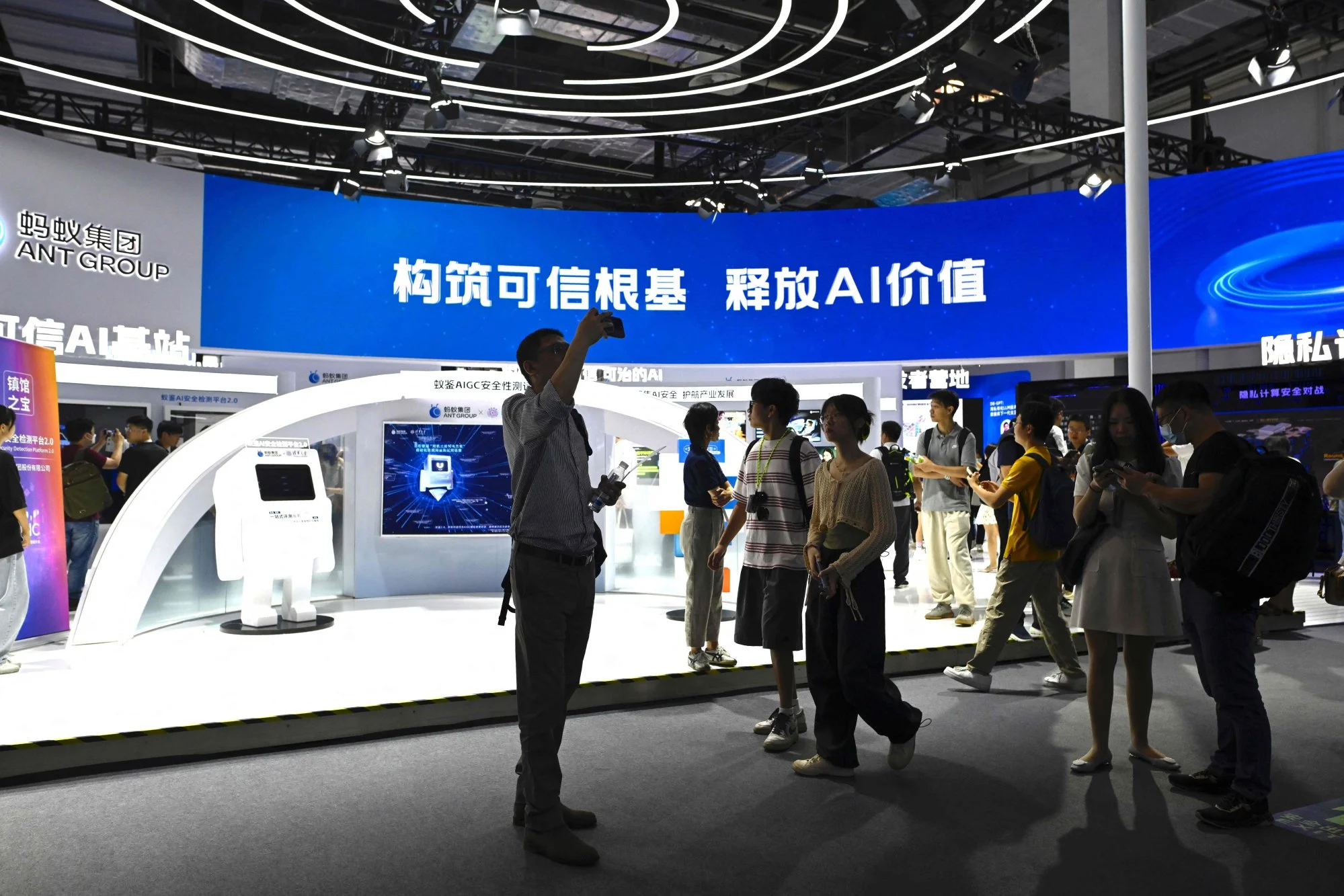
Photo: South China Morning Post
A new wave of Chinese artificial intelligence startups is bypassing the traditional “domestic first” playbook and aiming squarely at global markets from inception. For many of these companies, overseas users already represent the overwhelming majority of revenue — and future growth plans are tied more closely to San Francisco, Singapore and Frankfurt than Beijing or Shanghai.
The shift comes as competition in AI intensifies worldwide and as U.S. chip giant Nvidia warns that Chinese rivals are poised to challenge global incumbents not only in hardware but increasingly in software and AI infrastructure.
Chinese founders appear to agree — but they are thinking bigger than the domestic arena.
Overseas Users Drive Early Revenue
One of the clearest examples is Tripo AI, an image-to-3D model generation startup founded by Simon Song. Since launching its platform in June 2025, Tripo has grown monthly revenue to more than $1 million, according to the company. Roughly 90% of its users are located outside China.
The platform converts 2D images into production-ready 3D models used in gaming, animation, industrial design and e-commerce. Demand has been strongest in North America and Europe, where enterprises are experimenting aggressively with AI-assisted creative workflows.
Song says Western corporate clients tend to pilot emerging AI tools even before clear monetization pathways are established — a contrast to many domestic firms that prioritize near-term return on investment.
Tripo has been in discussions with major gaming studios, manufacturing firms and animation houses in the U.S. and Europe regarding strategic investments and partnerships. The company recently rolled out its H3.1 model, which improves rendering fidelity and reduces generation time. At the upcoming Game Developers Conference in San Francisco, it plans to unveil another tool designed to cut model creation time significantly — a key metric for professional users.
Chinese AI on the Global Conference Circuit
Chinese AI firms are no longer confined to domestic tech expos. Several startups are scheduled to present virtually at Nvidia’s annual GTC conference in California, one of the most influential AI industry gatherings in the world. Executives from Moonshot AI and engineers from ByteDance’s AI research division are also featured in conference sessions.
The global push accelerated after DeepSeek stunned investors last year with a reasoning model that rivaled leading Western systems at a fraction of the training cost. That breakthrough signaled that Chinese AI firms could compete internationally on capability, not just cost.
Exporting AI Tools to Power Chinese Manufacturers
Another startup, iSales, is targeting a different global opportunity: helping Chinese manufacturers expand overseas using AI-driven sales and marketing automation.
Founded by Tsinghua University graduate Pan Yiming, iSales has generated over $1 million in revenue since June by serving more than 300 small and mid-sized factories. The company charges around 40,000 yuan (approximately $5,800) per client for AI tools that automate lead generation, cross-border outreach and social media marketing.
Pan believes the addressable market is far larger. He expects more than 1,000 Chinese businesses to sign up this year, which would imply potential annual revenue exceeding $5 million at current pricing levels.
His pitch is straightforward: many Chinese industrial products already reach roughly 90% of the quality of comparable Japanese or German goods, often at one-third of the price. The bottleneck is not manufacturing — it is global customer acquisition. AI-driven marketing automation can close that gap.
Later this year, iSales plans to expand its platform to non-Chinese businesses, positioning itself as a competitor to global CRM providers such as Salesforce.
Government Support and Capital Strategy
Many of these startups benefit from local government support. iSales, which operates with a team of about 50 employees in Shanghai’s Pudong district, receives subsidized office space and incentives for using domestic AI foundation models.
At the same time, both iSales and Tripo are prioritizing U.S. dollar-denominated fundraising. Their long-term capital strategy includes potential listings in Hong Kong, which remains a preferred venue for Chinese technology firms seeking international investors.
iSales recently secured a seven-figure angel investment from Singapore-based Impa Ventures. Tripo’s founder, Simon Song, previously co-founded MiniMax, which listed on the Hong Kong Stock Exchange earlier this year and saw its shares rise following its first earnings release.
The dual approach — domestic operational support combined with global capital access — reflects how founders are building companies designed for international scalability from day one.
AI as a Creative Equalizer
Beyond revenue and valuation ambitions, some founders frame their work in philosophical terms. Song, who previously led animation teams at SenseTime, observed that even highly trained artists often spend years executing repetitive production tasks under a single creative director.
He argues that AI platforms can decentralize creative control, enabling individuals and small teams to design 3D assets, virtual environments and even consumer products independently. Tripo’s long-term roadmap includes tools that allow users to design and commercialize physical products through AI-assisted workflows — potentially reshaping e-commerce production models.
Macro Backdrop: Geopolitics and Consumer Trends
The broader geopolitical environment adds complexity. The reported death of Iranian Supreme Leader Ali Khamenei in joint U.S.-Israel strikes has increased diplomatic uncertainty, including questions about future high-level U.S.-China engagements.
Meanwhile, domestic economic signals in China remain mixed. Lunar New Year spending data suggest modest consumer resilience, potentially reducing the urgency for large-scale stimulus measures.
Chinese technology brands are also expanding visibility abroad. Smartphone maker Honor showcased experimental robotics-integrated devices at the Mobile World Congress in Barcelona, while Xiaomi launched new flagship smartphones at price points similar to last year’s models despite rising memory chip costs.
A Global-First Generation
The defining trait of this new AI cohort is mindset. Unlike earlier generations of Chinese tech firms that focused primarily on domestic scale before expanding abroad, today’s AI startups are designing products, fundraising strategies and conference calendars around international markets from inception.
In an era when AI capabilities diffuse rapidly and cloud infrastructure is globally accessible, geography is less of a constraint. For these companies, the world is not a secondary market — it is the starting point.
If revenue trends continue and overseas partnerships deepen, Chinese AI startups may increasingly shape the global competitive landscape rather than simply reacting to it.
.webp)
Popular articles



Subscribe to unlock premium content
Iceland’s Geothermal Revolution

Bali’s Digital Detox Revolution

Step Into the Future of Art
Iceland’s Geothermal Revolution
Bali’s Digital Detox Revolution
Iceland’s Geothermal Revolution