China’s AI Surge Accelerates as Alibaba, Baidu, and Moonshot Race to Challenge U.S. Tech Giants

China’s AI Surge Accelerates as Alibaba, Baidu, and Moonshot Race to Challenge U.S. Tech Giants
By
David Goldfarb
Last updated:
January 28, 2026
First Published:
April 25, 2026

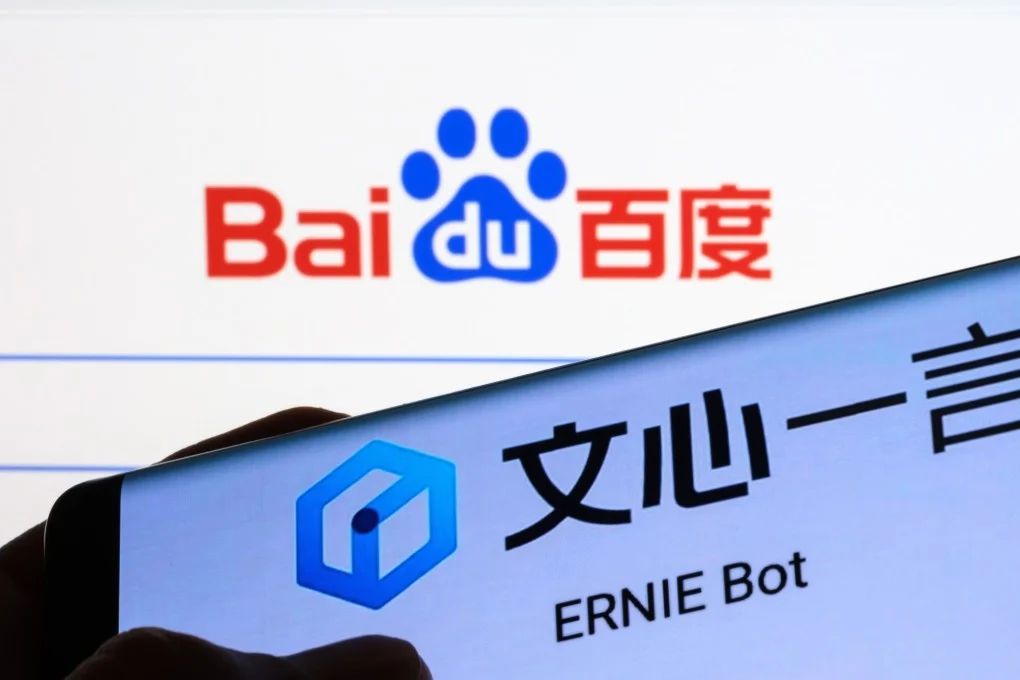
Photo: South China Morning Post
China’s AI Race Enters a New Phase
Chinese technology companies are moving at breakneck speed to release new artificial intelligence models, intensifying competition with U.S. leaders such as OpenAI, Anthropic, and Google. Just over a year after DeepSeek stunned the global tech industry with a low-cost chatbot that rivaled ChatGPT, China’s AI ecosystem has shifted into overdrive.
Since DeepSeek’s debut, which dramatically reduced inference costs and challenged assumptions about U.S. dominance in advanced AI, Chinese firms have prioritized faster release cycles, lower pricing, and deeper integration into existing digital platforms. The result is an increasingly crowded domestic AI landscape, with new models appearing every few weeks rather than every few months.
Industry analysts estimate that China now has more than 200 large language models either in production or development, supported by a fast-growing base of startups and tech giants alike.
Rapid-Fire Model Launches from Moonshot, Alibaba, Baidu, and Z.ai
This week alone highlighted just how intense the competition has become.
Beijing-based startup Moonshot AI unveiled Kimi K2.5, its latest multimodal model, claiming improvements in video generation and so-called agentic capabilities. Agentic AI refers to systems designed to carry out tasks autonomously, such as planning workflows, booking services, or managing digital operations with minimal human input. Moonshot says K2.5 outperforms leading U.S. models across several internal evaluations. The update arrived barely three months after the company released its K2 model, underscoring how compressed development timelines have become.
Earlier the same day, Alibaba introduced Qwen3-Max-Thinking, a new generative AI model capable of producing text, images, and video from user prompts. Alibaba said the model topped several global benchmarks, including a comprehensive test known as “Humanity’s Last Exam,” and emphasized its ability to automatically select the most suitable AI tools for different tasks. The company also highlighted lower operating costs and enhanced memory, allowing the system to draw from past conversations for more contextual responses.
Momentum has extended beyond these two companies. In mid-January, Z.ai launched a free version of its GLM 4.7 model, triggering a surge in demand so strong that the company temporarily restricted new signups for its AI coding assistant due to limited computing capacity.
Meanwhile, Baidu’s Hong Kong-listed shares climbed to their highest level in nearly three years after the company released Ernie 5.0, its latest generative AI system. Baidu claims the model surpasses Google’s Gemini 2.5 Pro on several performance measures, reinforcing investor confidence in China’s homegrown alternatives.
Even leaders in Silicon Valley acknowledge the narrowing gap. Google DeepMind CEO Demis Hassabis recently said Chinese AI models may be only “months” behind their U.S. counterparts.
Open-Source and Low-Cost Models Fuel Global Expansion
Beyond headline-grabbing releases, Chinese companies are pursuing a distinct strategy to grow their influence internationally: open-source availability and aggressive pricing.
Unlike many U.S. platforms that rely on closed systems and premium subscriptions, Chinese AI models are frequently open-sourced or offered at minimal cost. This approach allows developers to customize underlying code and deploy models locally, making them particularly attractive in emerging markets across Africa, Southeast Asia, and parts of Latin America.
Consultants tracking global adoption trends report that DeepSeek usage in Africa is estimated to be two to four times higher than in most other regions, reflecting strong demand for affordable AI tools among startups, universities, and small businesses.
Industry observers say the strategy is deliberate. By encouraging developers abroad to build applications on Chinese models, companies aim to embed their technology deeply into foreign digital ecosystems, creating long-term dependence similar to how Android spread globally in its early years.
Ecosystem Integration Matters More Than Benchmark Wins
While benchmark scores dominate headlines, Chinese tech firms are increasingly focused on something else: user growth and platform integration.
Rather than competing solely on raw model performance, companies like Tencent, Alibaba, ByteDance, and Baidu are weaving AI directly into their existing consumer ecosystems, from messaging and payments to shopping and entertainment.
Tencent, which operates WeChat alongside major gaming and video platforms, recently announced plans to distribute 1 billion yuan (about $140 million) in cash rewards through its Yuanbao AI chatbot during the Lunar New Year period. The campaign mirrors earlier “digital red envelope” promotions that helped WeChat become one of China’s dominant mobile payment platforms more than a decade ago.
ByteDance and Baidu are running similar holiday-driven incentives to retain users on their AI apps. Alibaba has taken integration even further by upgrading its Qwen application so users can shop on Taobao, order food, and complete payments without leaving the chatbot interface. Qwen now reports more than 100 million monthly active users, a figure that continues to climb as AI becomes embedded into everyday digital habits.
Equity analysts note that this tight integration could unlock new revenue streams. The logic is simple: the more users rely on AI assistants, the more likely they are to transact within the same ecosystem, helping companies offset the high costs of training and operating large models.
A Traffic-First Strategy Shapes China’s AI Playbook
Unlike many U.S. companies that prioritize technical leadership and premium enterprise contracts, Chinese firms are largely competing for user traffic at scale. The goal is to capture hundreds of millions of consumers first, then monetize later through commerce, advertising, and digital services.
This traffic-first strategy reflects China’s broader internet playbook, where dominance is built by embedding services into daily life rather than charging upfront for advanced capabilities.
With massive domestic platforms already in place and growing traction in overseas markets, Chinese AI companies are positioning themselves not just as model developers, but as ecosystem architects.
One year after DeepSeek disrupted expectations, China’s AI sector is no longer playing catch-up. Instead, it is executing a distinct strategy built on speed, affordability, and integration — reshaping the global AI landscape in ways that extend far beyond benchmark charts.
.webp)
Popular articles



Subscribe to unlock premium content
Iceland’s Adventure Lodges Are Redefining Remote Work

Inside Japan’s Luxury Ryokans That Blend Tradition with Modern Experiences

Greece’s Tourism-Driven Economy: Lessons From Financial Crises

Iceland’s Adventure Lodges Are Redefining Remote Work
Inside Japan’s Luxury Ryokans That Blend Tradition with Modern Experiences
Iceland’s Adventure Lodges Are Redefining Remote Work