China Escalates Military Pressure With Large-Scale Drills Around Taiwan

China Escalates Military Pressure With Large-Scale Drills Around Taiwan
By
Rachel Steinberg
Last updated:
December 29, 2025
First Published:
December 29, 2025

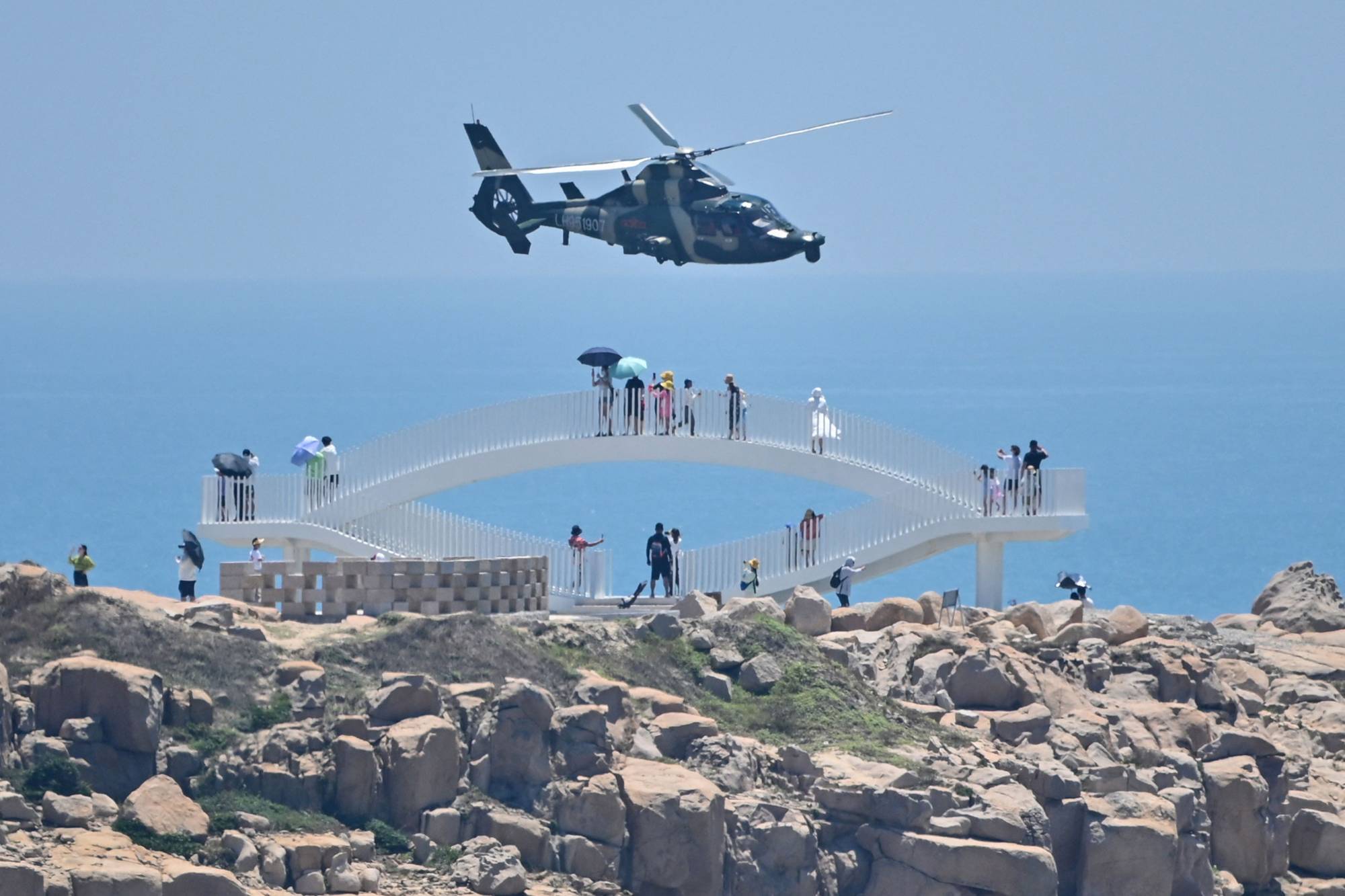
Photo: The Japan Times
Joint Military Drills Encircle the Island
China’s military launched an extensive round of war games around Taiwan on Monday, deploying army, navy, air force, and artillery units in a coordinated show of force. The drills, branded “Justice Mission 2025,” surround the democratically governed island and simulate scenarios that closely resemble a blockade or full scale assault.
China’s Eastern Theatre Command said the exercises include live fire components scheduled to begin Tuesday. According to official statements, five zones around Taiwan will be placed under temporary airspace and maritime restrictions for a 10 hour window starting at 8 a.m. local time, significantly disrupting regional traffic routes.
Growing Frequency and Strategic Timing
This marks the sixth major set of Chinese military exercises around Taiwan since 2022, when a visit by then U.S. House Speaker Nancy Pelosi sharply escalated cross strait tensions. Analysts note that each successive drill has grown more complex, more public, and more closely aligned with real world combat scenarios.
The latest exercises follow closely after the United States approved $11.1 billion in arms sales to Taiwan, the largest single weapons package in the island’s history. Beijing strongly criticized the deal and warned it would take forceful countermeasures, a warning now materializing through expanded military activity.
The drills also come amid heightened rhetoric after comments by Japan’s prime minister suggesting a Chinese attack on Taiwan could trigger a military response from Tokyo, drawing sharp reactions from Beijing.
Military Capabilities on Display
China’s military said it deployed fighter jets, bombers, unmanned aerial vehicles, warships, and long range rocket systems. The drills include simulations of coordinated strikes on mobile land based targets and multi directional assaults intended to overwhelm Taiwan’s defenses.
Military analysts say the exercises increasingly blur the line between training and operational rehearsal, reducing warning time for Taiwan, the United States, and regional allies in the event of a real conflict. This strategy, experts argue, is designed to normalize large scale force movements while maintaining strategic ambiguity.
A spokesperson for the Eastern Theatre Command described the drills as a direct warning to pro independence forces in Taiwan and to what Beijing calls external interference.
Taiwan Mobilizes and Responds
Taiwan’s government swiftly condemned the drills, calling them irresponsible provocations that threaten regional stability. The presidential office urged Beijing not to misjudge the situation and warned that continued pressure could have serious consequences for peace in the Asia Pacific.
Taiwan’s defense ministry said the island’s armed forces were placed on high alert and had initiated rapid response exercises designed to counter any sudden escalation. These drills focus on quickly repositioning troops and assets should China attempt to turn an exercise into an actual attack.
Over the past 24 hours, Taiwan tracked at least two Chinese military aircraft and 11 naval vessels operating around the island. Senior security officials said several Chinese ships deliberately moved closer to Taiwan’s contiguous zone, which extends 24 nautical miles from its coast.
Coast Guard and Civilian Impact
Taiwan’s coast guard confirmed it dispatched large patrol vessels to monitor Chinese coast guard activity near its waters. Authorities said they are coordinating closely with the military to reduce disruption to commercial shipping lanes and fishing operations during the drills.
Despite the heightened tensions, financial markets on the island remained calm. Taiwan’s benchmark stock index rose 0.6% to a record high in morning trading, signaling investor confidence that the situation remains contained for now.
Public reaction on the island was mixed. Some residents described the drills as intimidation tactics that have become increasingly routine. Others expressed concern about the long term psychological and security pressure imposed by repeated military maneuvers.
Messaging and Psychological Warfare
Alongside the drills, China’s military released a series of propaganda posters with aggressive language and imagery. The visuals depicted simulated strikes across Taiwan and emphasized themes of control, denial, and deterrence against foreign intervention.
State media reported that the exercises focus on sealing off key ports, including Keelung in the north and Kaohsiung in the south, which handle a large share of Taiwan’s trade and energy imports. While China has practiced port blockades before, this is the first time it has openly framed the drills as deterrence against outside military involvement.
One poster appeared to show civilian vessels adapted for amphibious landings, highlighting growing concerns about China’s ability to mobilize non military assets in a potential invasion scenario.
Broader Geopolitical Stakes
China maintains that Taiwan is part of its territory and has not ruled out the use of force to bring the island under its control. Taiwanese authorities reject Beijing’s claims, insisting that only the people of Taiwan have the right to determine their future.
Recent comments from Chinese leaders have reinforced Beijing’s stance, tying Taiwan’s status to its broader vision of global order. For Taiwan, the drills underscore the urgency of strengthening defense readiness while maintaining international support.
As military pressure intensifies and diplomatic rhetoric hardens, the latest exercises highlight how rapidly cross strait tensions can escalate, with implications that extend far beyond Taiwan to global supply chains, regional security, and the balance of power in Asia.
.webp)
Popular articles



Subscribe to unlock premium content
Iceland’s Geothermal Revolution
Bali’s Digital Detox Revolution

Step Into the Future of Art

Iceland’s Geothermal Revolution
Bali’s Digital Detox Revolution
Iceland’s Geothermal Revolution