Champagne’s Festive Sales Pop Masks Deep Labor Scandals and Rising Trade Pressures

Champagne’s Festive Sales Pop Masks Deep Labor Scandals and Rising Trade Pressures
By
David Goldfarb
Last updated:
January 1, 2026
First Published:
January 1, 2026

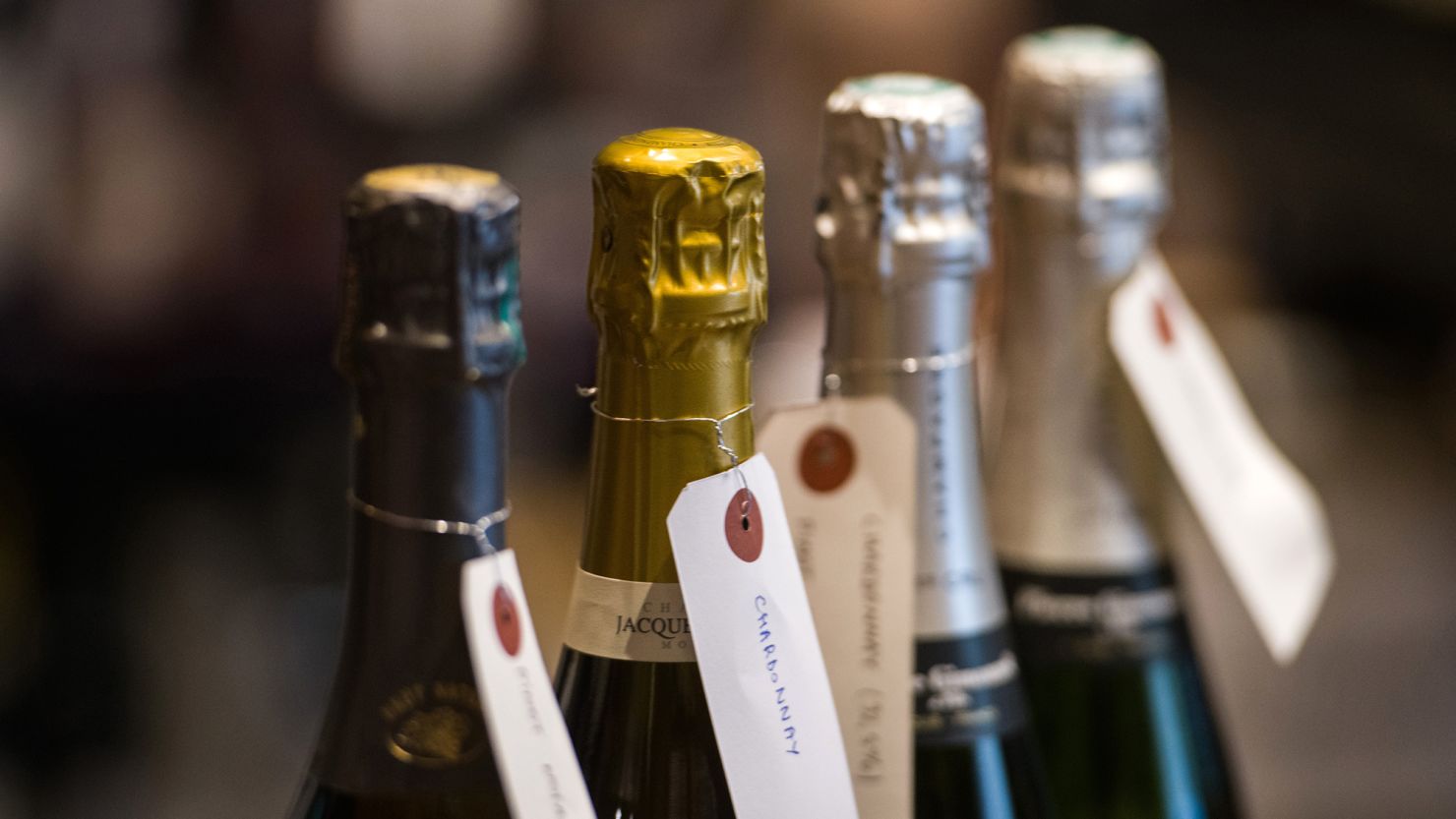
Photo: CNN
Holiday Demand Remains Strong, but the Shine Is Fading
Champagne remains the celebratory drink of choice during the Christmas and New Year period, with sales traditionally spiking in the final weeks of the year. From luxury restaurants to private households, bottles from northeastern France continue to symbolize celebration and status.
Yet behind the seasonal surge lies an industry grappling with reputational damage, labor abuses, weaker global demand, and mounting trade pressures. While festive consumption offers a short-term lift, structural challenges are increasingly shaping the outlook for one of France’s most valuable wine exports.
A Vast Harvest Dependent on Seasonal Labor
Each year, Champagne producers rely on an estimated 120,000 seasonal workers to harvest grapes across roughly 34,000 hectares of vineyards. The harvest typically lasts just two to three weeks, creating an intense and highly time-sensitive labor environment.
Many of these workers are foreign migrants, including undocumented laborers, drawn by short-term employment opportunities. The compressed harvest window, combined with the sector’s heavy reliance on subcontractors and employment agencies, has long made oversight difficult. In recent years, however, these vulnerabilities have escalated into full-scale scandal.
The “Harvest of Shame” and Human Trafficking Convictions
The darker side of Champagne production came into sharp focus during the 2023 harvest, conducted amid an extreme heatwave. At least four migrant grape pickers, known locally as vendangeurs, died while working in the vineyards. The episode was later widely referred to as the “harvest of shame.”
Subsequent investigations revealed systemic abuses, including excessive working hours, pay well below legal standards, unsafe transport, and a lack of basic protections such as drinking water, shaded rest areas, and heat safety protocols. Workers also reported being housed in overcrowded and unsanitary conditions.
In 2025, three individuals were put on trial and later convicted for human trafficking and the exploitation of more than 50 West African migrant workers during the 2023 harvest. Victims described being treated “like slaves” and “animals,” with labor inspectors concluding that their safety, health, and dignity had been seriously compromised.
Prosecutors emphasized that uncontrolled subcontracting had allowed illegal practices to flourish, warning that the prestige of Champagne could not come at the cost of “blatant mistreatment” hidden behind supply chains.
Industry Response and Zero-Tolerance Commitments
The Comité Champagne, which represents more than 16,000 winegrowers, 130 cooperatives, and around 370 Champagne houses, publicly acknowledged the reputational damage caused by the court case. Industry leaders pledged a zero-tolerance approach to labor abuses and launched a reform initiative titled “Together for the Champagne Harvest.”
The action plan focuses on stricter oversight of labor contractors, improved worker accommodation standards, clearer accountability for Champagne houses, and reinforced health and safety requirements during harvest periods.
Major producers have moved to demonstrate compliance. Moët & Chandon, the world’s largest Champagne producer and part of LVMH, invested approximately €1.5 million in 2024 to build new accommodation for an additional 90 grape pickers. The company now provides housing capacity for up to 1,900 seasonal workers.
Despite these efforts, unions and labor groups continue to question how consistently reforms have been implemented across the industry, particularly among smaller producers and subcontractors.
Weather Volatility Adds to Production Strain
Labor issues have unfolded alongside growing climate-related challenges. The 2024 harvest delivered below-average yields after spring frosts and prolonged summer rainfall damaged vines and delayed ripening. While late-season improvements prevented a complete failure, volumes remained constrained.
Conditions improved significantly in 2025, with more stable weather producing what many growers described as a high-quality vintage. Even so, Champagne production remains highly sensitive to climate volatility, adding uncertainty to long-term supply planning.
Sales Slide Amid Changing Consumption and Tariffs
Champagne’s global dominance remains intact in value terms. While it accounts for only about 10 percent of global sparkling wine production by volume, it represents roughly 35 percent of total market value, reflecting its premium positioning.
However, demand has softened. Global alcohol consumption is declining, particularly among younger consumers, and Champagne is not immune. Shipments fell to 299 million bottles in 2023, an 8.2 percent drop year over year. In 2024, volumes declined further to 271 million bottles.
Looking ahead, sales face additional pressure from U.S. import tariffs on European Union goods. The United States is one of Champagne’s most important export markets, and higher duties have already led to a noticeable slowdown in shipments, squeezing margins for producers and importers alike.
Internal Labor Tensions Persist
Challenges within Champagne houses extend beyond the vineyards. In late 2025, labor unions at Moët & Chandon and Veuve Clicquot called for strike action over canceled year-end bonuses and demands for higher pay, highlighting broader tensions around compensation and cost-cutting.
Management has indicated that wage negotiations are scheduled for early 2026, but the disputes underscore growing pressure on producers to balance profitability, workforce expectations, and brand integrity.
A Prestigious Industry at a Crossroads
Champagne’s New Year sales surge continues to provide a symbolic and financial boost, but it no longer tells the full story. Behind the celebratory cork pops lies an industry confronting ethical scrutiny, shifting consumer behavior, climate risk, and geopolitical trade barriers.
If shipments continue to decline, labor reform will be only one of several critical challenges Champagne producers must address. Preserving the global prestige of the appellation may increasingly depend not just on quality in the bottle, but on transparency, accountability, and resilience throughout the supply chain.
.webp)
Popular articles



Subscribe to unlock premium content
Iceland’s Geothermal Revolution
Bali’s Digital Detox Revolution
Step Into the Future of Art

Iceland’s Geothermal Revolution
Bali’s Digital Detox Revolution
Iceland’s Geothermal Revolution