Carvana Stock Slides After Short Seller Alleges $1 Billion Earnings Inflation

Carvana Stock Slides After Short Seller Alleges $1 Billion Earnings Inflation
By
Alina Sinclair
Last updated:
January 29, 2026
First Published:
January 29, 2026

Getty Images
Carvana hit by sharp selloff after explosive short-seller report
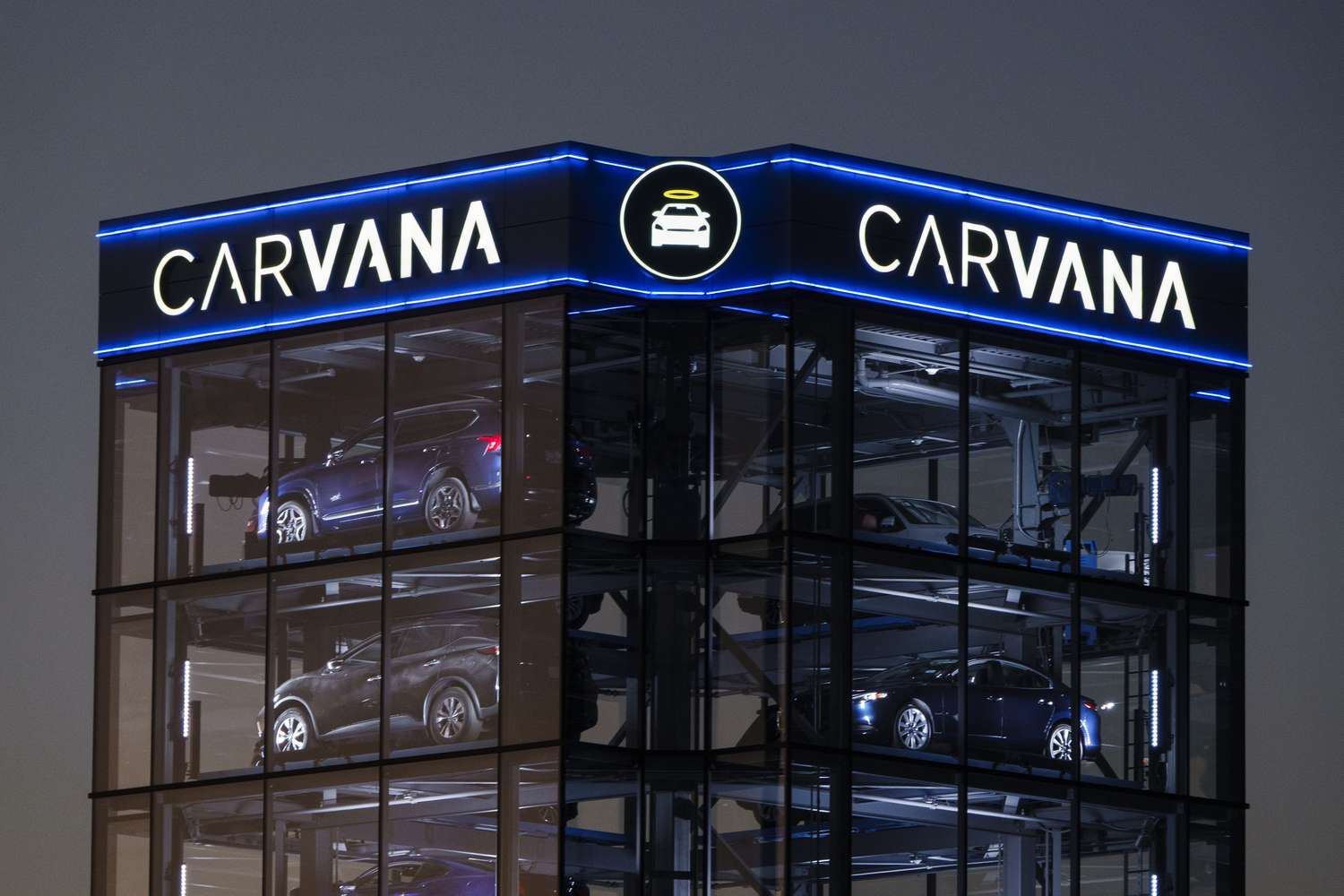
Shares of Carvana tumbled sharply after a new short-seller report accused the online used-car retailer of overstating its profits and relying heavily on businesses tied to its founder’s family. The stock closed Wednesday at $410.04, down 14.2%, wiping out billions in market value and marking one of the company’s steepest single-day declines over the past year.
The selloff followed allegations from Gotham City Research, which claimed Carvana inflated its earnings across 2023 and 2024 by more than $1 billion. The firm also alleged that Carvana is far more dependent on related-party transactions than previously disclosed, particularly through entities connected to CEO Ernie Garcia III’s family.
Carvana had recently joined the S&P 500, a milestone that brought fresh institutional interest to the stock. That momentum was abruptly reversed as investors digested the accusations.
Allegations center on related-party transactions and loan practices
Gotham City Research argued that Carvana’s reported profitability is closely tied to DriveTime Automotive Group and Bridgecrest Acceptance Corp., two companies owned by Ernest Garcia II, Carvana’s largest shareholder and the father of its CEO.
According to the short seller, Carvana’s earnings are being supported by what it described as aggressive debt issuance at DriveTime, risky auto loans, and accounting practices it labeled irregular. Gotham claimed that these intercompany relationships play a much larger role in Carvana’s financial results than investors have been led to believe.
To support its case, Gotham published what it said were audited 2024 financial statements for DriveTime and Bridgecrest, obtained through Freedom of Information Act requests. These documents have not been independently verified by major news organizations.
The firm also suggested Carvana could face delays in filing its annual 10-K report due to the complexity of these relationships.
Carvana pushes back and reaffirms earnings timeline
Carvana strongly rejected the claims.
In a statement, the company said the report was “inaccurate and intentionally misleading,” adding that all related-party transactions are fully and properly disclosed in its financial filings. Carvana also reaffirmed that it plans to release its 2025 earnings on Feb. 18, pushing back on speculation that its annual reporting would be postponed.
Management has previously highlighted improvements in margins, operating efficiency, and unit economics as evidence of a successful turnaround following the company’s near-collapse in late 2022.
A familiar target for short sellers
This is not the first time Carvana has been in the crosshairs of short sellers.
Last year, Hindenburg Research publicly disclosed a short position in the company, arguing that Carvana’s recovery was largely an illusion driven by unstable loan structures and accounting maneuvers. Although Hindenburg has since shut down operations, its critique added to a long-running debate over Carvana’s business model and financial transparency.
Despite repeated skepticism, Carvana’s stock staged one of the most dramatic rebounds in recent market history. After falling below $5 per share during its 2022 liquidity crisis, the stock surged to more than $477 by Tuesday’s close, fueled by cost-cutting, debt restructuring, and renewed investor optimism around used-car demand.
Wednesday’s drop brought shares back to $410.04, though the stock remains up massively from its lows, underscoring just how volatile the ride has been.
Market reaction highlights ongoing investor uncertainty
The 14.2% plunge represents Carvana’s second-worst trading day over the past year and reflects lingering concerns about transparency, related-party exposure, and the sustainability of its turnaround.
At current levels, Carvana still carries a multibillion-dollar market capitalization, making it one of the most closely watched names in the online auto retail space. Analysts note that the company’s future hinges on continued profitability improvements, stable credit performance in its loan portfolio, and maintaining investor confidence as scrutiny intensifies.
With earnings scheduled for Feb. 18, the upcoming report will be a critical moment for Carvana to address the allegations directly and provide clarity on its financial structure. Until then, traders and long-term investors alike are bracing for continued volatility in one of the market’s most polarizing comeback stories.
.webp)
Popular articles



Subscribe to unlock premium content
Zara’s Hyper-Fast Fashion Supply Chain Is Changing Global Retail
The Rise of Apple Stores as Experiential Brand Centers Worldwide

Boutique Eco-Lodges in Costa Rica Redefining Ultra-Luxury Travel

Zara’s Hyper-Fast Fashion Supply Chain Is Changing Global Retail
The Rise of Apple Stores as Experiential Brand Centers Worldwide
Zara’s Hyper-Fast Fashion Supply Chain Is Changing Global Retail