Boeing Hits Seven-Year High in Jet Deliveries as Production Momentum Builds

Boeing Hits Seven-Year High in Jet Deliveries as Production Momentum Builds
By
Leah Rosenfeld
Last updated:
January 12, 2026
First Published:
January 12, 2026

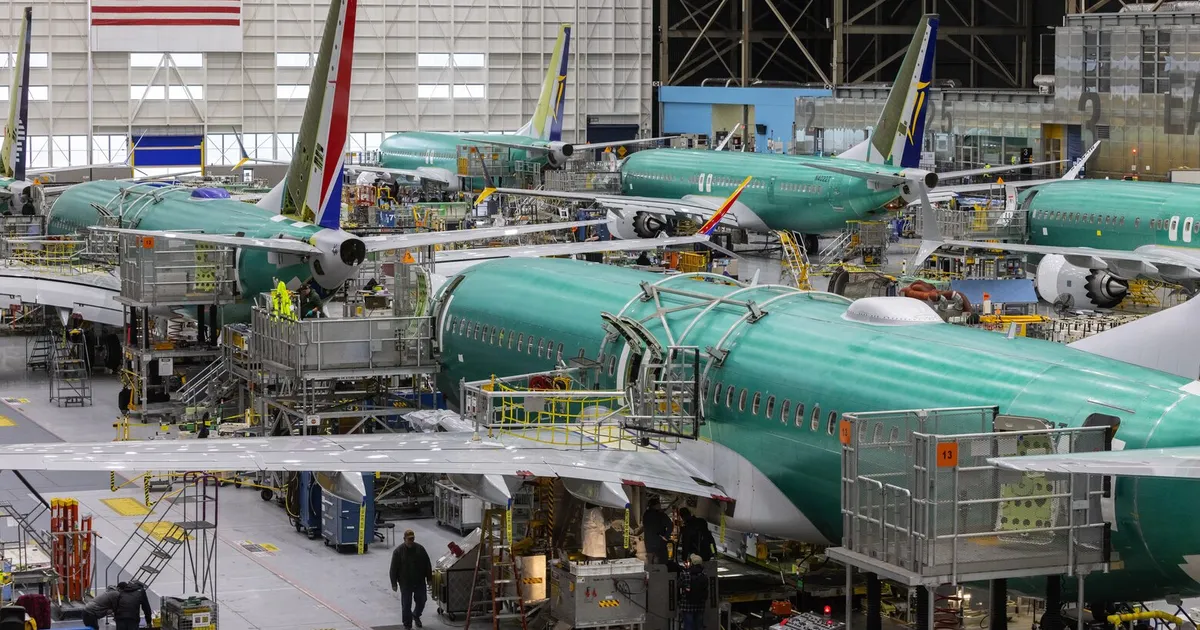
Photo: The Seattle Times
Boeing is approaching a milestone it has not reached in years: its highest annual aircraft deliveries since 2018. After a prolonged period marked by safety failures, regulatory scrutiny, and production bottlenecks, the U.S. aerospace giant is showing tangible signs of recovery and is now preparing to accelerate output further.
The company is expected to confirm this week that last year’s deliveries topped any annual total since before the 737 Max crisis began. Management is scheduled to provide additional clarity on production targets and delivery timelines later this month, offering investors and airline customers a clearer picture of how quickly Boeing believes it can scale.
From Crisis Management to Measured Recovery
Boeing’s turnaround has been slow and hard-earned. The manufacturer sharply reduced output following two fatal 737 Max crashes in 2018 and 2019, then faced renewed scrutiny after a midair door-plug blowout in early 2024. The Covid-era supply chain shock further complicated recovery, disrupting parts availability and draining the industry of skilled labor.
Under CEO Kelly Ortberg, a veteran aerospace executive who returned from retirement to lead the company, Boeing has focused on stabilizing its manufacturing culture. Industry analysts say the shift is evident on factory floors, where process discipline and quality controls have tightened after years of inconsistency.
Consultants note that Boeing’s internal reforms have reduced “traveled work,” a costly practice where tasks are completed out of sequence, increasing error rates. Training programs have also been expanded following findings from federal investigators that cited insufficient oversight and preparation as contributors to past incidents.
Production Ramps With FAA Support
A critical turning point for Boeing has been improved relations with regulators. In September, the Federal Aviation Administration signaled renewed confidence by allowing Boeing to issue its own airworthiness certificates for certain 737 and 787 aircraft, a privilege that had been curtailed during earlier safety probes.
The FAA has also approved incremental increases in 737 Max production. The monthly cap was raised from 38 to 42 aircraft last fall, with Boeing executives indicating that reaching that rate is expected by early 2026. Further increases, potentially in steps of five aircraft per month, are under consideration if quality benchmarks continue to be met.
On the wide-body side, Boeing is targeting production of roughly eight 787 Dreamliners per month in the near term, reflecting renewed demand for long-haul aircraft as international travel rebounds.
Deliveries Drive Cash Flow and Confidence
Aircraft deliveries are crucial to Boeing’s financial health because customers typically pay the majority of an aircraft’s price upon handover. In the first 11 months of last year, Boeing delivered 537 planes, with estimates suggesting roughly 60 additional jets were handed over in December, including a significant number of 737 Max aircraft.
While that total remains well below the 806 planes delivered in 2018, it represents a meaningful improvement over recent years and signals a return to more predictable operations. Boeing has not reported a full-year profit since 2018, but analysts increasingly expect a return to profitability as delivery volumes rise and inventory clears.
Investors appear to be buying into the recovery narrative. Boeing shares have climbed more than 30 percent over the past year, outperforming the broader market and reflecting optimism that the worst of the company’s manufacturing disruptions are behind it.
Strategic Control Over the Supply Chain
Boeing has also moved to tighten control over its supply base. In December, the company completed its acquisition of Spirit AeroSystems, a key fuselage supplier that Boeing had spun off two decades ago. The deal gives Boeing direct oversight of a critical component of its production process, reducing coordination risks and quality gaps.
Executives view the move as essential to sustaining higher output rates without repeating past mistakes. Greater vertical integration is expected to improve schedule reliability and reduce last-minute fixes that can delay deliveries.
Certification Delays Still a Drag
Despite progress, Boeing continues to face headwinds. Several high-profile aircraft programs remain uncertified, including the 777X and the smaller Max 7 and Max 10 variants. These delays have deferred billions of dollars in expected cash inflows and forced airlines to adjust fleet plans.
Southwest Airlines, Boeing’s largest 737 customer, is still waiting for the Max 7, a model critical for lower-demand routes. Airline executives now expect the aircraft to enter service no earlier than 2027, far later than Boeing’s original projections.
Demand Remains Strong Across the Market
Even with supply constraints, demand for new aircraft remains robust. Airlines globally are ordering years in advance, with some securing delivery slots into the mid-2030s. Through November, Boeing logged roughly 1,000 gross orders, outpacing its European rival Airbus over the same period.
Recent deals underscore renewed confidence. Alaska Airlines announced an order for more than 100 737 Max 10 jets, citing confidence in Boeing’s recovery and the aircraft’s eventual certification. The carrier also expanded its wide-body fleet with additional Dreamliner options to support international growth following its acquisition of Hawaiian Airlines.
Industry analysts note that the wide-body market is gaining momentum as premium international travel rebounds. Airlines are increasingly investing in long-haul jets to meet demand for overseas routes, particularly in Asia and Europe.
Global load factors reached nearly 84 percent in November, the highest on record, according to airline industry data. With planes flying fuller and travel demand remaining resilient, airlines are under pressure to modernize fleets and secure new capacity.
A Gradual but Meaningful Shift
Boeing’s recovery is far from complete, and certification hurdles and execution risks remain. Still, the combination of higher deliveries, steadier production, regulatory confidence, and strong order books marks a clear shift from crisis response to forward planning.
As Boeing prepares to outline its 2026 production strategy later this month, the focus is no longer on whether the manufacturer can stabilize, but on how quickly it can safely scale. For airlines, investors, and the broader aerospace industry, that distinction matters more than it has in nearly a decade.
.webp)
Popular articles



Subscribe to unlock premium content
Iceland’s Geothermal Revolution

Bali’s Digital Detox Revolution

Step Into the Future of Art

Iceland’s Geothermal Revolution
Bali’s Digital Detox Revolution
Iceland’s Geothermal Revolution