Blue Origin Faces Multi-Year Setback After New Glenn Explosion Damages Key Launch Facility

Blue Origin Faces Multi-Year Setback After New Glenn Explosion Damages Key Launch Facility
By
Alina Sinclair
Last updated:
June 2, 2026
First Published:
June 2, 2026

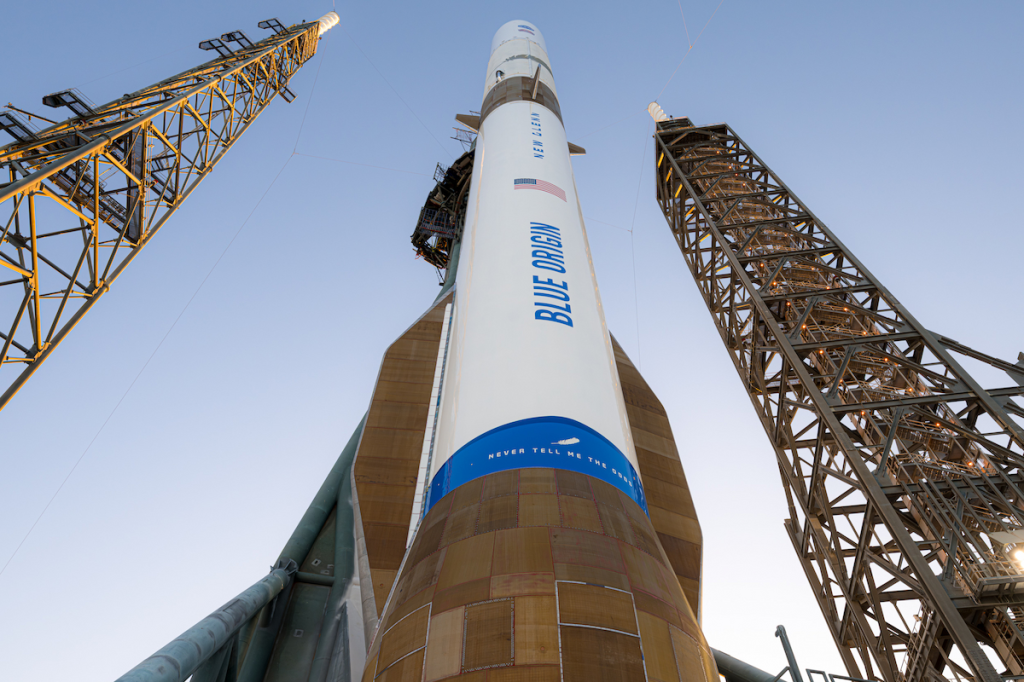
Photo: TechCrunch
A major explosion involving Blue Origin's New Glenn rocket has created one of the most significant challenges in the company's history, potentially delaying critical launch operations for years and raising questions about future mission timelines.
According to Jared Isaacman, the launchpad damaged during last week's fiery test accident may not be fully restored until 2028, highlighting the scale of the destruction and the complexity of rebuilding one of the most important pieces of launch infrastructure in the U.S. space industry.
The incident not only impacts Blue Origin's ambitions in commercial spaceflight but could also affect key government contracts, lunar exploration missions, satellite deployments, and partnerships with major customers including Jeff Bezos's other ventures.
Explosion Turns Critical Test Into Major Crisis
The accident occurred during a hot-fire test of Blue Origin's New Glenn rocket at a Space Force launch complex in Cape Canaveral, Florida.
Hot-fire tests are among the most important milestones in rocket development, allowing engineers to ignite engines while the vehicle remains secured to the ground. These tests help verify propulsion systems, fueling operations, and launch readiness before an actual flight.
Instead of a routine validation exercise, the test ended in a massive explosion that engulfed the rocket and launch infrastructure in flames.
Fortunately, all personnel were safely evacuated and no injuries were reported.
Following the incident, Bezos described the event as a "very rough day" while emphasizing the company's commitment to rebuilding and moving forward.
Why the Launchpad Matters So Much
For most rocket companies, launch infrastructure is just as valuable as the rocket itself.
Launchpads require years of engineering, environmental approvals, construction work, fuel systems integration, safety certifications, and testing before becoming operational.
The damaged facility served as Blue Origin's primary New Glenn launch site, making its loss especially significant.
Unlike some competitors that operate multiple active launch complexes, Blue Origin currently relies on a single operational New Glenn pad. As a result, any extended downtime could have a substantial impact on launch schedules and customer commitments.
Industry experts note that rebuilding a heavily damaged launch complex often takes years rather than months due to the complexity of replacing fueling systems, flame trenches, electrical networks, communication infrastructure, and safety equipment.
NASA Preparing for a Long Recovery Timeline
Speaking about the incident, NASA Administrator Jared Isaacman indicated that a recovery timeline extending to 2028 remains a realistic possibility.
According to Isaacman, historical data from launchpad construction and reconstruction projects suggests that even accelerated rebuilding efforts require considerable time and resources.
NASA has already begun working closely with Blue Origin to evaluate the damage, conduct technical reviews, and assist with root-cause investigations.
The agency's immediate focus is understanding exactly what failed during the test and identifying the steps necessary to safely resume operations.
NASA officials have emphasized that they want Blue Origin to remain a strong participant in America's growing space ecosystem despite the setback.
Impact on NASA's Artemis Moon Program
The explosion comes at a particularly sensitive time because Blue Origin plays a critical role in NASA's Artemis program.
Artemis represents the United States' ambitious effort to return astronauts to the Moon and establish a long-term human presence on the lunar surface.
Blue Origin has secured multiple contracts tied to these missions, including development of the Blue Moon lunar lander.
One major milestone involves launching an uncrewed version of the Blue Moon MK1 lander aboard a New Glenn rocket.
The mission is considered an important step toward future lunar exploration efforts and technology demonstrations.
Any prolonged delay to New Glenn's launch schedule could create ripple effects across NASA's broader lunar roadmap and potentially require adjustments to mission planning.
Heavy-Lift Competition Narrows
The setback also highlights the limited number of companies capable of providing true heavy-lift launch capabilities.
Heavy-lift rockets are designed to transport large payloads into orbit and beyond, making them essential for deep-space exploration, large satellite deployments, and lunar missions.
Currently, the market is dominated by a small group of launch providers.
SpaceX remains the most active player with its Falcon 9, Falcon Heavy, and Starship programs.
Blue Origin's New Glenn was developed specifically to compete in this market by offering a reusable heavy-lift launch system capable of carrying substantial payloads to orbit.
With one of the industry's key launchpads now out of service, NASA and commercial customers may increasingly rely on alternative launch providers in the near term.
Commercial Customers Face Growing Uncertainty
The consequences extend well beyond government contracts.
Blue Origin has signed launch agreements with several commercial customers whose schedules may now be affected.
One of the most significant is Amazon's Project Kuiper initiative.
Blue Origin had planned to launch dozens of Kuiper satellites as part of Amazon's effort to build a low-Earth-orbit broadband internet network designed to compete with Starlink.
The company was preparing to transport 48 satellites during an upcoming mission, making the launchpad disruption particularly challenging.
Amazon faces regulatory deployment requirements and has been working aggressively to place satellites into orbit and begin commercial services.
Any delays could increase pressure on launch schedules and deployment targets.
Market Reaction Extends Beyond Blue Origin
The impact of the explosion is also being felt across the broader space industry.
Satellite communications company AST SpaceMobile, which relies on Blue Origin for future launches, experienced a sharp decline in its share price following news of the accident.
Investors are increasingly evaluating how launch availability could affect satellite deployment timelines, revenue forecasts, and future growth plans for companies that depend on third-party launch providers.
The situation demonstrates how interconnected the modern space economy has become, where a single infrastructure failure can affect multiple businesses across telecommunications, aerospace, defense, and technology sectors.
A Second Launchpad Is Still Under Development
Blue Origin has been working on a second New Glenn launch facility at Vandenberg Space Force Base in California.
However, that site remains under development and is not yet ready to fully replace the damaged Florida facility.
While the California launchpad may eventually provide additional flexibility and redundancy, it is unlikely to eliminate the near-term operational challenges caused by the accident.
Until alternative infrastructure becomes available, Blue Origin will likely focus on damage assessments, reconstruction planning, and determining the root cause of the explosion.
What Happens Next?
The coming months will be critical for Blue Origin.
Investigators will analyze data from the failed hot-fire test, engineers will evaluate the structural damage to the launch complex, and executives will develop a roadmap for rebuilding operations.
The company has already regained limited access to portions of the launch site and begun outlining reconstruction plans, but a full recovery is expected to be a lengthy undertaking.
For Blue Origin, the challenge now extends beyond repairing physical infrastructure. The company must also maintain customer confidence, preserve momentum in the highly competitive launch market, and continue supporting NASA's long-term lunar exploration goals.
While setbacks are not uncommon in the history of spaceflight, the scale of this incident means that the road back could be measured in years rather than months, making it one of the most consequential moments in Blue Origin's development as a major space launch provider.
.webp)
Popular articles



Subscribe to unlock premium content
China’s Second-Hand Designer Boom

The Rise of Livestream Shopping in Southeast Asia

The Rise of Ghost Kitchens in New York City

China’s Second-Hand Designer Boom
The Rise of Livestream Shopping in Southeast Asia
China’s Second-Hand Designer Boom