Biotech IPO Market Reopens as Big Pharma Acquisition Wave Continues to Dominate Deal Flow

Biotech IPO Market Reopens as Big Pharma Acquisition Wave Continues to Dominate Deal Flow
By
Augusta Parker
Last updated:
June 16, 2026
First Published:
June 16, 2026

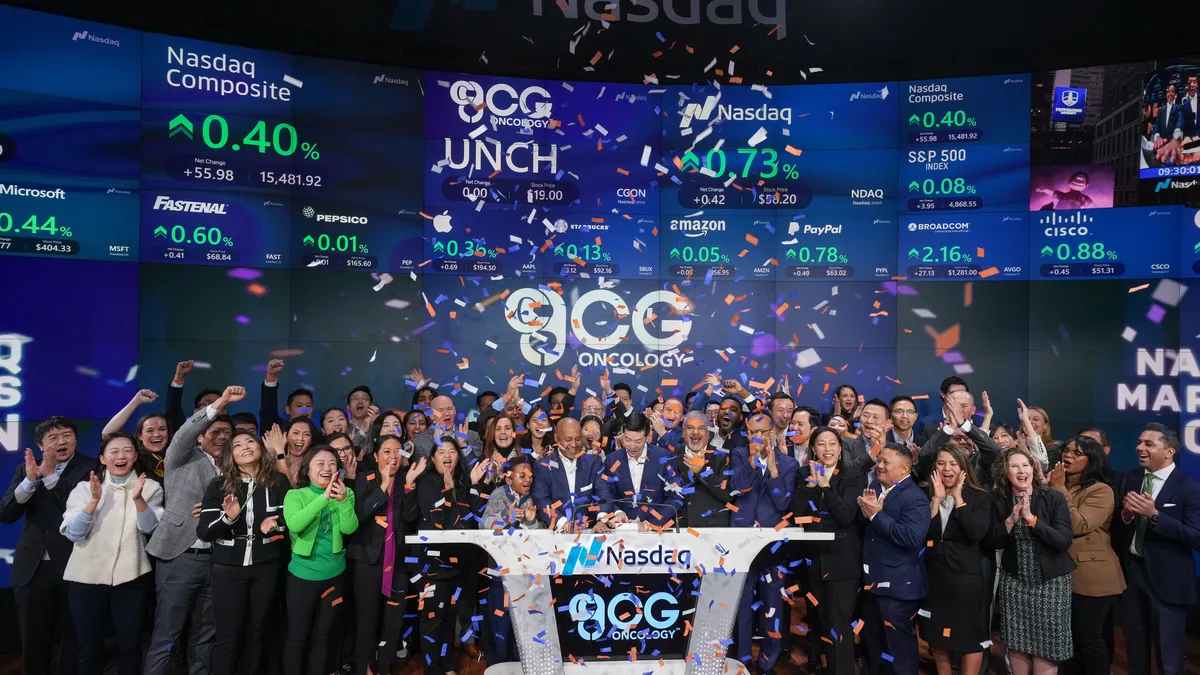
The global biotech sector is entering a new phase of capital market activity as public listings begin to recover after several years of subdued IPO momentum. However, despite signs of reopening in equity markets, mergers and acquisitions led by major pharmaceutical companies continue to define the industry’s direction, according to leading healthcare investment bankers.
While investor appetite for biotech IPOs is improving, the strongest companies are increasingly being acquired by large pharma groups before ever reaching the public markets, reinforcing the dominance of strategic buyers in shaping industry outcomes.
IPO Market Shows Early Signs of Recovery but Remains Selective
After a prolonged slowdown following the pandemic-era boom, the biotech IPO window is beginning to reopen, but access remains highly selective.
Top healthcare bankers note that only companies with strong clinical data, differentiated technologies, or late-stage drug pipelines are successfully attracting public market interest. Many early-stage or mid-tier biotech firms still face significant challenges in securing favorable valuations.
Investor behavior has also shifted considerably. Compared to the high-liquidity environment of 2020 and 2021, today’s markets are far more disciplined, with capital concentrating in fewer, higher-quality assets.
This has resulted in a bifurcated market where:
- Category-leading biotech firms can access IPO markets
- Mid-tier companies struggle to secure strong valuations
- Early-stage firms increasingly rely on private funding or partnerships
Dual-Track Strategy Becomes the New Standard
A growing number of biotech companies are now pursuing dual-track strategies, preparing for initial public offerings while simultaneously engaging in acquisition discussions with large pharmaceutical companies.
This approach allows firms to maximize valuation options, but in many cases, M&A opportunities materialize before IPO plans are finalized.
Bankers report multiple recent examples where companies in advanced IPO preparation stages were acquired by global pharma firms, highlighting the intensity of competition for high-value biotech assets.
This trend reflects a broader shift in capital markets where strategic buyers are often able to move faster and offer more certainty than public listings.
Big Pharma Accelerates Acquisition Strategy to Secure Future Pipelines
Large pharmaceutical companies are increasingly active in the biotech M&A space as they look to address looming patent expirations expected later this decade and into the early 2030s.
With blockbuster drugs losing exclusivity, major drugmakers are under pressure to replenish their pipelines through external innovation.
As a result, Big Pharma companies are:
- Deploying significant cash reserves for acquisitions
- Targeting late-stage clinical assets
- Competing aggressively for first-in-class therapies
- Expanding into oncology, immunology, and metabolic diseases
- Increasing willingness to pursue larger, higher-risk deals
Bankers note that strategic buyers are increasingly focused on securing “best-in-class” and “first-in-class” therapies rather than spreading capital across multiple early-stage bets.
This shift has intensified competition for premium biotech assets, particularly those with strong clinical differentiation or large addressable markets.
Rising Deal Sizes Reflect Strong Competition for Assets
Biopharma M&A activity has seen a notable increase in both deal volume and transaction size.
Recent data from investment banking activity indicates:
- Seven deals valued between $5 billion and $15 billion were recorded in 2025
- Already six deals in the same range have been completed in 2026 so far
- Upfront payments in major transactions are rising significantly
The increase in upfront valuations reflects both stronger confidence in drug development pipelines and heightened competition among acquirers.
In many cases, pharmaceutical companies are willing to commit larger capital amounts earlier in deal structures to secure priority assets before rivals enter bidding processes.
Pipeline Pressure Driving Long-Term M&A Demand
One of the structural forces behind sustained M&A activity is the approaching wave of patent expirations across the pharmaceutical industry.
A significant portion of current blockbuster drug revenues is expected to face generic competition in the late 2020s and early 2030s, forcing companies to aggressively rebuild their pipelines.
Historically, a large share of successful pharmaceutical products have originated from acquisitions or licensing agreements rather than internal research and development, reinforcing the importance of external innovation.
This structural dependency ensures that biotech M&A remains a core growth strategy for the industry, regardless of broader capital market cycles.
Selectivity Defines the New Investment Environment
The biotech financing landscape has become increasingly selective, with both public and private investors focusing capital on companies perceived as category leaders.
Investment committees and boards are now conducting more rigorous due diligence before approving transactions, leading to slower but higher-quality deal flow.
Key characteristics of today’s funding environment include:
- Greater concentration of capital in fewer companies
- Higher scrutiny of clinical differentiation
- Increased demand for proven efficacy data
- Preference for scalable therapeutic platforms
- Strong focus on oncology and metabolic disease pipelines
According to industry analysis, a growing share of new drug approvals is now classified as first-in-class therapies, reinforcing the importance of innovation in securing investment and acquisition interest.
Alternative Financing Structures Gain Popularity
With traditional IPO and M&A pathways becoming more competitive, biotech companies are increasingly exploring alternative financing models.
These include:
- Royalty-based financing agreements for pre-commercial assets
- Structured licensing partnerships with pharmaceutical firms
- Milestone-driven funding arrangements
- Hybrid equity-debt structures
These mechanisms allow companies to raise capital while delaying dilution or full acquisition, offering flexibility in uncertain market conditions.
China Emerges as a Growing Biotech Power Center
Another notable shift in the global biotech landscape is the increasing role of Chinese companies in drug development and innovation.
China is now widely viewed as an emerging alternative hub for biotechnology research, alongside established centers in the United States and Europe.
Key factors driving this trend include:
- Expanding domestic R&D investment
- Faster clinical trial timelines in certain segments
- Growing venture capital participation
- Increasing global licensing partnerships
Industry observers note that China’s biotech ecosystem is rapidly gaining scale and sophistication, contributing to a more globally distributed innovation network.
Select High-Value Deals Signal Strong Buyer Appetite
Despite broader market caution, strategic acquisitions remain active at the high end of the market.
Large pharmaceutical companies continue to pursue targeted acquisitions in areas such as oncology and rare diseases, often paying premium valuations for late-stage assets with strong clinical data.
Recent transactions demonstrate a willingness among buyers to move beyond traditional small-scale “bolt-on” deals when strategically important assets become available.
This reflects a broader shift in corporate strategy, where companies are increasingly prioritizing pipeline strength over cost efficiency in acquisition decisions.
The Bigger Picture
The biotech industry is entering a period defined by contrasting forces: improving IPO conditions on one side and sustained M&A dominance on the other.
While public markets are gradually reopening for high-quality issuers, strategic acquisitions by Big Pharma continue to absorb many of the strongest companies before they reach the stock exchange.
This dual dynamic is creating a more competitive and selective environment, where only the most differentiated biotech firms can successfully navigate both pathways.
At the same time, structural drivers such as patent cliffs, rising R&D costs, and increasing demand for innovative therapies ensure that acquisition activity will remain a central feature of the industry for years to come.
.webp)
Popular articles



Subscribe to unlock premium content
Why Some People Hire Professional Bystanders to Simulate Social Interaction in Public Spaces
.png)
The $60 Million Obsession with Designer Bonsai Trees

Conquering the Poles in Absolute Luxury

Why Some People Hire Professional Bystanders to Simulate Social Interaction in Public Spaces
The $60 Million Obsession with Designer Bonsai Trees
Why Some People Hire Professional Bystanders to Simulate Social Interaction in Public Spaces