
Australia’s Economic Growth Hits Two Year High as Investment and Consumer Spending Surge

Australia’s Economic Growth Hits Two Year High as Investment and Consumer Spending Surge
By
David Goldfarb
Last updated:
December 3, 2025
First Published:
April 25, 2026

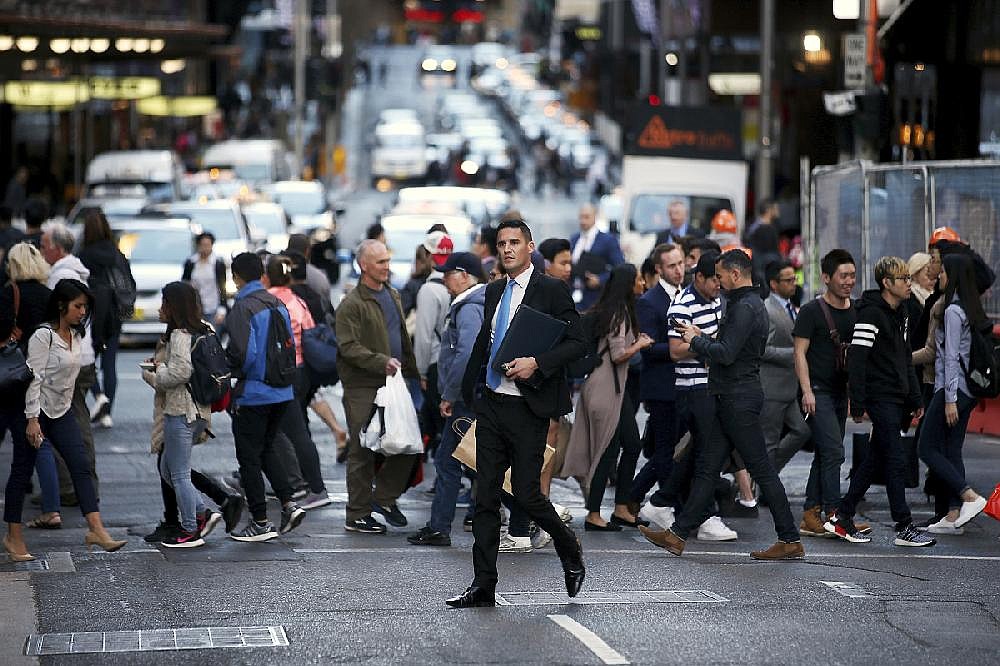
Australia’s economy accelerated at its fastest pace in nearly two years during the third quarter, powered by robust business investment and solid household spending. While the headline numbers fell slightly short of market forecasts, the underlying strength of domestic demand shows an economy that is still running hotter than the Reserve Bank of Australia would prefer.
GDP Performance and Key Drivers
Data from the Australian Bureau of Statistics shows that gross domestic product expanded two point one percent compared with the same period last year. This marks the strongest annual pace since late twenty twenty three and only marginally below economists’ expectations of two point two percent.
Quarter on quarter, GDP rose zero point four percent versus the Reuters forecast of zero point seven percent. Analysts say the softer headline result masks a stronger underlying story. Stripping out inventory adjustments and trade, the domestic economy grew one point two percent over the quarter, its most rapid increase in more than two years.
Domestic final demand was the standout contributor, adding one point one percentage points to overall growth. Private investment saw its fastest expansion since early twenty twenty one, driven by businesses upgrading machinery, expanding production, and investing heavily in data center infrastructure across New South Wales and Victoria.
Household spending also remained resilient despite high living costs, with increased outlays on essential categories such as electricity, gas, rent, healthcare, insurance and food.
Trade Weakness Moderates Growth
Despite strong domestic momentum, net trade dragged GDP down by zero point one percentage point as import growth outpaced export gains. Businesses restocking international goods and stronger demand for imported equipment contributed to this imbalance. Economists note that inventory write downs and trade effects are partly timing related rather than signs of weakening consumer or business activity.
Inflation, Rate Outlook and the RBA’s Dilemma
Ahead of the GDP release, Reserve Bank of Australia Governor Michele Bullock warned that the economy was operating at the upper limit of its potential and that persistent inflation remained a concern. Annual inflation accelerated to three point eight percent in October, the fastest pace in seven months and notably above the bank’s two to three percent target range.
At its previous meeting, the RBA held interest rates steady at three point six percent, citing a strong economy, tight labor conditions and entrenched price pressures. With domestic demand proving firmer than expected, economists now believe a rate cut is unlikely in the near term, and some do not rule out a potential rate increase if inflation fails to moderate.
Market reaction reflected this sentiment, with the Australian government ten year bond yield rising four basis points to four point six five percent following the data. Yields have climbed more than fifty basis points since mid October.
Broader Economic Context
Australia’s second quarter growth was one point eight percent year on year, an improvement from the one point three percent recorded in the previous quarter. That earlier strength was driven by domestic spending from both households and the government, laying the groundwork for the even stronger third quarter performance.
Despite the positive momentum, policymakers remain wary of overheating. The RBA expects inflation to stay above target until the second half of next year, placing additional weight on upcoming economic data and next week’s policy decision. Many analysts expect the central bank to keep interest rates unchanged, though the door remains open for further tightening if price pressures intensify.
Australia’s growth outlook now hinges on how long domestic spending can remain strong in the face of high borrowing costs, elevated inflation and weak external demand. For now, the third quarter results suggest the economy is showing more resilience than expected while simultaneously pushing against the limits of its current capacity.
.webp)
Popular articles



Subscribe to unlock premium content
AI-Curated Luxury Shopping Experiences Transform the Market

Limited-Run Anime Originals Redefining Global Entertainment

Micro-Vertical Farming Becomes Corporate Gold
.png)
AI-Curated Luxury Shopping Experiences Transform the Market
Limited-Run Anime Originals Redefining Global Entertainment
AI-Curated Luxury Shopping Experiences Transform the Market


