
Asian Stocks Slide as Global Selloff Deepens on Inflation Fears and Middle East Tensions

Asian Stocks Slide as Global Selloff Deepens on Inflation Fears and Middle East Tensions
By
Rachel Steinberg
Last updated:
March 19, 2026
First Published:
April 25, 2026

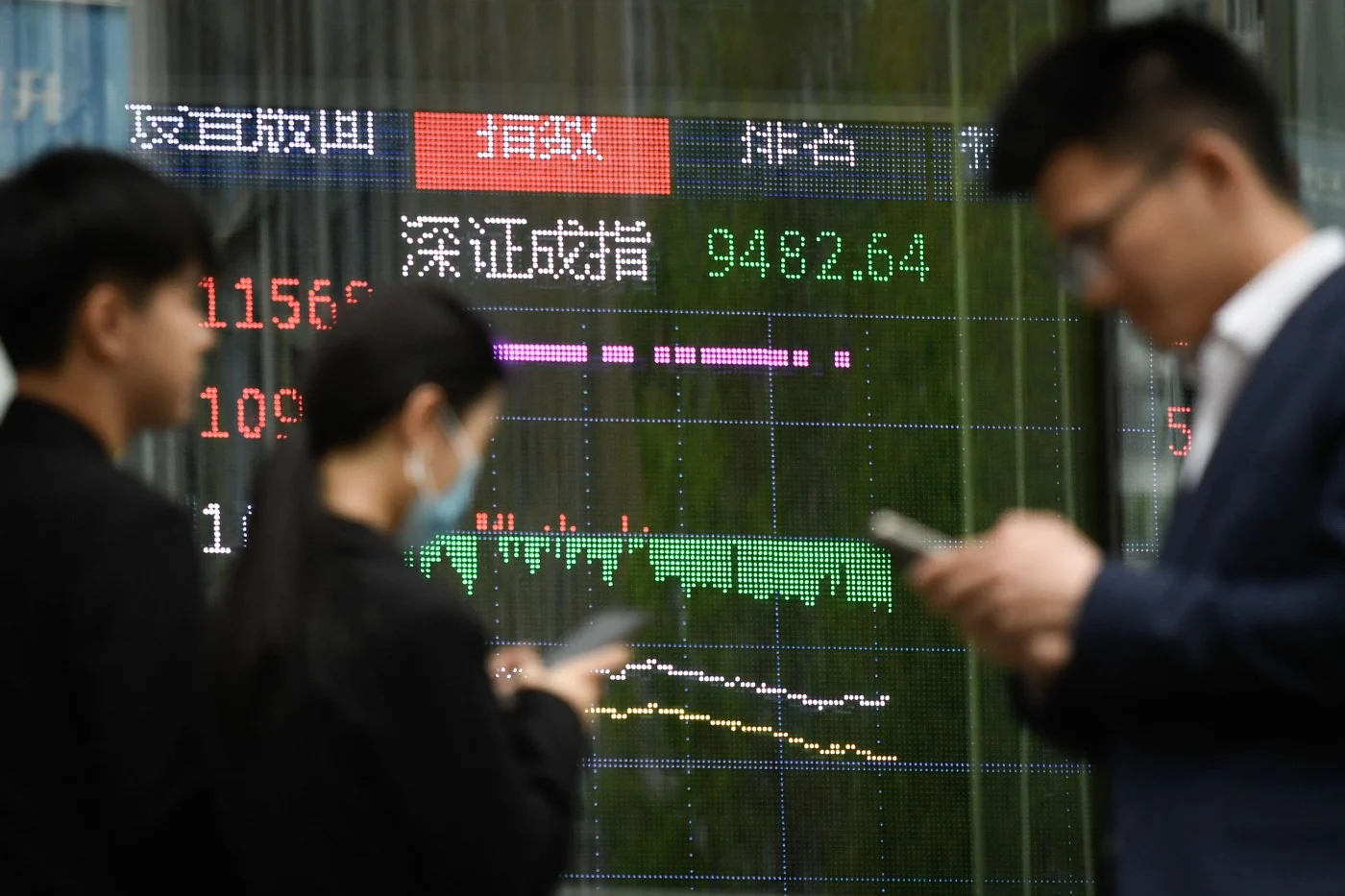
Photo: NST
Global Selloff Spreads to Asia
Markets across Asia-Pacific moved sharply lower, extending a global risk-off trend after a weak session on Wall Street. The downturn followed renewed concerns over persistent inflation in the United States and escalating geopolitical tensions in the Middle East, both of which are driving uncertainty in global financial markets.
The Dow Jones Industrial Average fell 1.63% overnight to close at 46,225.15, marking its lowest level of the year and slipping below its key 200-day moving average—a technical signal often associated with bearish momentum. The S&P 500 dropped 1.36%, while the Nasdaq Composite declined 1.46%, reflecting broad-based weakness across sectors.
Inflation Data and Fed Outlook Shake Confidence
Investor sentiment was further dented by stronger-than-expected inflation data. The U.S. Producer Price Index rose 0.7% in February, more than double the 0.3% forecast, signaling that upstream price pressures remain stubbornly high.
The Federal Reserve kept interest rates steady in the 3.5% to 3.75% range, but Chair Jerome Powell indicated that inflation is not cooling as quickly as policymakers had anticipated. While the Fed’s projections still include potential rate cuts in 2026 and 2027, the timeline remains uncertain, keeping markets on edge.
Energy Prices Surge Amid Iran Conflict
Adding to the volatility is the sharp rise in energy prices driven by the ongoing Iran conflict. Brent crude surged over 4.5% to trade above $112 per barrel, while U.S. West Texas Intermediate (WTI) climbed to around $97.40.
The spike in oil prices is amplifying inflation concerns globally and raising fears of a supply shock, particularly as disruptions in key shipping routes and energy infrastructure threaten to tighten supply. For energy-importing economies across Asia, this creates additional pressure on currencies, trade balances, and corporate margins.
Bank of Japan Holds Steady Amid Uncertainty
Regional investors also digested the latest decision from the Bank of Japan, which held its benchmark interest rate at 0.75% in line with expectations.
While the decision itself was widely anticipated, the broader policy outlook remains uncertain as Japan faces a complex mix of moderating domestic inflation and rising external risks, particularly from energy markets. The central bank continues to monitor wage growth and global developments before committing to further policy shifts.
Regional Markets Post Broad Losses
Equity markets across Asia saw widespread declines, with Japan leading the losses. The Nikkei 225 dropped 3.06%, while the broader Topix fell 2.35%.
In South Korea, the Kospi declined 2.22%, reversing gains from the previous session, while the Kosdaq slipped 1.62%. Major chipmakers Samsung Electronics and SK Hynix both dropped more than 3%, reflecting weakness in the technology sector.
Australia’s S&P/ASX 200 fell 1.7%, while Hong Kong’s Hang Seng Index lost 1.66%. Mainland China’s CSI 300 Index was down 0.99%.
In India, the Nifty 50 dropped 2.24%, alongside a 2.01% fall in the BSE Sensex. Shares of HDFC Bank also declined around 5% following governance concerns linked to a senior leadership resignation, adding to market pressure.
Currency Volatility Adds to Market Stress
Currency markets also reflected rising stress levels. The South Korean won weakened sharply, briefly crossing the 1,500 mark against the U.S. dollar. Authorities signaled increased vigilance, highlighting concerns over capital outflows and exchange rate instability as global uncertainty intensifies.
Outlook Remains Fragile
The combination of persistent inflation, rising oil prices, and geopolitical instability is creating a challenging environment for global markets. Investors are increasingly cautious, with risk appetite declining as uncertainty grows across multiple fronts.
In the near term, market direction will likely depend on how inflation evolves in the U.S., whether energy prices stabilize, and how central banks respond to shifting economic conditions. Until clearer signals emerge, volatility is expected to remain elevated across both equity and commodity markets.
.webp)
Popular articles



Subscribe to unlock premium content
AI-Curated Luxury Shopping Experiences Transform the Market

Limited-Run Anime Originals Redefining Global Entertainment

Micro-Vertical Farming Becomes Corporate Gold
.png)
AI-Curated Luxury Shopping Experiences Transform the Market
Limited-Run Anime Originals Redefining Global Entertainment
AI-Curated Luxury Shopping Experiences Transform the Market


