Asia Stocks Rally as South Korea Sets New Peak Despite Escalating U.S. Tariff Signals

Asia Stocks Rally as South Korea Sets New Peak Despite Escalating U.S. Tariff Signals
By
David Goldfarb
Last updated:
February 23, 2026
First Published:
April 25, 2026

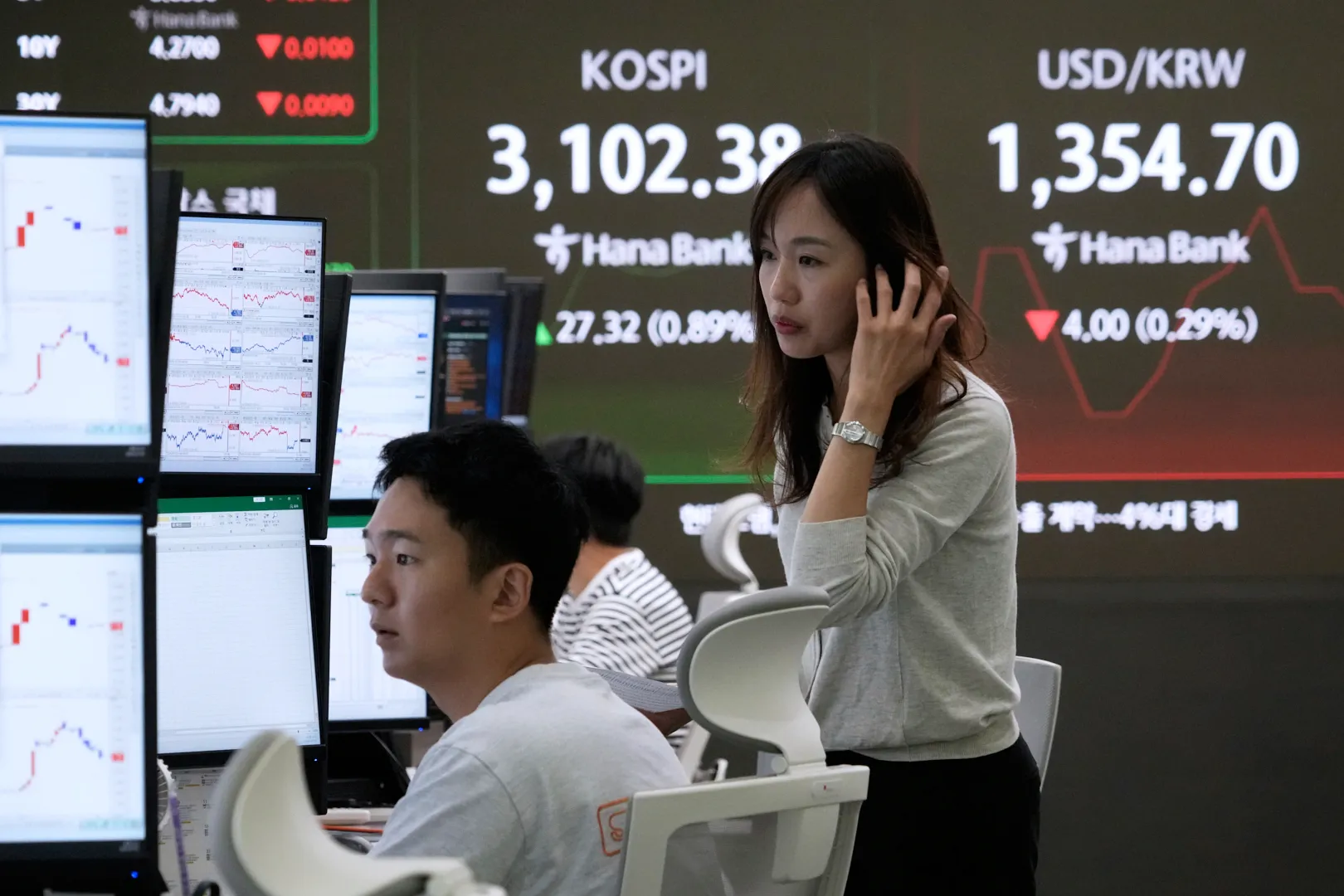
Photo: The Hill
Market Snapshot
Asia-Pacific equities opened the week with broad gains, signaling resilience even as global trade tensions re-entered the spotlight. Investor sentiment improved after Wall Street’s positive close, with regional benchmarks largely brushing aside the uncertainty triggered by fresh tariff rhetoric from Donald Trump.
South Korea led the advance, where the Kospi climbed roughly 1.7%, extending its rally to a third consecutive session and reaching an all-time high. Technology heavyweights SK Hynix and Samsung Electronics posted gains of more than 3% and 2%, respectively, buoyed by continued optimism around global chip demand and improving export data. The small-cap Kosdaq also edged higher, adding about 0.7%.
Elsewhere, Australia’s S&P/ASX 200 ticked up modestly in early trading, while Hong Kong’s Hang Seng Index surged over 2%, supported by strength in financials and property stocks. Markets in China and Japan remained closed for a public holiday, thinning regional liquidity but not derailing the overall upward bias.
Tariff Policy and Legal Backdrop
Over the weekend, President Trump signaled plans to lift the baseline level of global tariffs to 15%, up from 10%, a move that could affect hundreds of billions of dollars in annual trade flows. The announcement followed a landmark ruling by the U.S. Supreme Court, which invalidated large portions of the administration’s earlier tariff measures implemented under emergency powers.
Despite the legal setback, analysts say the broader protectionist framework remains intact. Economists at Rystad Energy, including chief economist Claudio Galimberti, noted that while the ruling narrows the scope for country-specific tariffs, it does not eliminate the administration’s ability to raise overall duties. If the proposed ceiling is fully implemented, the effective average tariff rate could exceed levels seen under the previous regime.
Ripple Effects Across Asset Classes
Risk-sensitive assets showed mixed reactions. Bitcoin slipped more than 3%, briefly trading below the $65,000 mark, as traders reassessed global growth and liquidity expectations. Market strategists pointed out that the cryptocurrency increasingly behaves like a high-beta asset, tending to amplify shifts in macro sentiment rather than acting as a safe haven.
Energy markets also softened. Brent crude futures declined about 0.6% to near $71 per barrel, while West Texas Intermediate fell roughly 0.8% to the mid-$65 range, giving back earlier gains as traders weighed the potential demand impact of slower trade growth.
Strategic and Political Implications
Policy observers, including Arthur Laffer Jr. of Laffer Tengler Investments, argue the court decision represents a hurdle but not a reversal of the administration’s broader trade agenda. Countries that have recently negotiated bilateral arrangements with Washington, such as Vietnam and India, may face renewed pressure to maintain or expand concessions as tariff policy remains central to U.S. economic strategy.
Wall Street Context
The positive tone in Asia followed a constructive session in the United States. The S&P 500 rose about 0.7% to finish near 6,910, while the Nasdaq Composite gained roughly 0.9% to close around 22,886. The Dow Jones Industrial Average added more than 230 points, rebounding from intraday losses as investors welcomed the prospect of reduced tariff pressure on corporate costs.
Outlook
With legal uncertainty lingering and tariff levels potentially rising, markets are likely to remain highly sensitive to policy signals in the weeks ahead. Investors are balancing two competing forces: the near-term relief from the court ruling and the longer-term risk that higher baseline tariffs could reshape global supply chains, corporate margins, and inflation trajectories.
.webp)
Popular articles



Subscribe to unlock premium content
Remote Himalayan Villages Transforming Ancient Traditions into Lucrative Wellness Ventures

Gilded Holidays in Fashion

Frozen Frontiers of Luxury

Remote Himalayan Villages Transforming Ancient Traditions into Lucrative Wellness Ventures
Gilded Holidays in Fashion
Remote Himalayan Villages Transforming Ancient Traditions into Lucrative Wellness Ventures