Apple’s Next Big Test Rests on an AI-Powered Siri That Can Drive iPhone Upgrades

Apple’s Next Big Test Rests on an AI-Powered Siri That Can Drive iPhone Upgrades
By
Calder Monroe
Last updated:
December 31, 2025
First Published:
December 31, 2025

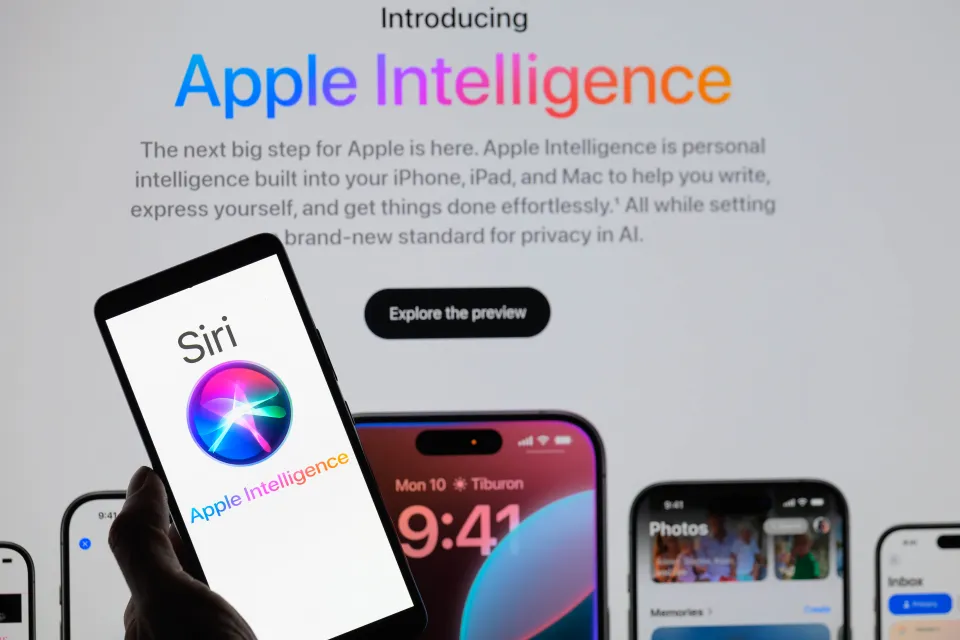
Photo: The Sun
A High Stakes Moment for Apple
Apple is heading into 2026 facing one of the most consequential product moments in its recent history. After failing to deliver a promised generative AI upgrade to Siri earlier this year, the company has publicly committed to launching a significantly enhanced version of the voice assistant next year. With Apple approaching its 50th anniversary, the pressure to get it right could not be higher.
The delay has amplified criticism that Apple is lagging behind competitors such as Google and OpenAI in artificial intelligence. Another misstep would risk reinforcing the perception that Apple is reacting to the AI revolution rather than shaping it.
AI Expectations and a Missed Deadline
Apple introduced its broader Apple Intelligence platform in stages, rolling out limited features in the fall. However, the centerpiece was meant to be a new Siri capable of handling more complex tasks through generative AI, a feature Apple heavily marketed alongside the iPhone 16.
That upgrade never arrived. Instead, Apple confirmed the Siri overhaul would be pushed to 2026, potentially as much as 21 months after its original announcement. The delay disappointed users and investors who had expected Apple to unveil a deeply integrated AI experience capable of rivaling ChatGPT and Google’s Gemini.
Tariffs, Politics, and a Temporary Win
Compounding Apple’s challenges was its exposure to President Donald Trump’s trade agenda. Among major technology companies, Apple stood out as particularly vulnerable to tariffs due to its global supply chain.
Chief Executive Officer Tim Cook spent months navigating Washington, ultimately pledging up to $600 billion in US investments over four years. While analysts noted that much of the spending was already planned, the commitment helped ease political pressure. Trump dropped calls for US based iPhone manufacturing and granted Apple tariff relief.
Markets reacted swiftly. Apple shares surged and are up roughly 35 percent since Cook’s high profile Oval Office appearance. With the trade threat reduced, attention has shifted squarely back to Apple’s product strategy and AI ambitions.
Why Siri Matters More Than Ever
Apple now needs Siri to do more than catch up. The company must deliver an AI experience compelling enough to push users with older devices to upgrade. Currently, Apple Intelligence is limited to iPhone 15 Pro models and newer, narrowing its immediate addressable market.
The original investment thesis was clear. A smarter Siri would trigger an iPhone super cycle, convincing millions of users to buy new hardware just to access advanced AI features. That surge never materialized in 2025.
For Apple, 2026 represents a second and likely final opportunity to make that case.
Hardware Sales Are the Core Monetization Bet
Unlike competitors that charge monthly subscriptions for advanced AI services, Apple offers Apple Intelligence at no additional cost. That strategy keeps users inside the ecosystem but leaves hardware upgrades as the primary revenue lever.
If Siri cannot meaningfully differentiate the iPhone experience, Apple risks missing out on AI driven growth altogether. Services alone are unlikely to offset stagnant device sales after years of post pandemic normalization.
Apple could eventually introduce paid AI tiers, but doing so would mark a significant shift from its current approach.
Leadership Changes and Internal Reset
Apple’s AI stumble has already triggered internal changes, including the departure of key executives such as former AI chief John Giannandrea. The company says it now has the right leadership and engineering teams in place to deliver on its promises.
The challenge will be execution. Siri must feel deeply integrated, context aware, and genuinely useful in everyday tasks, not merely comparable to standalone chatbots.
Beyond the iPhone
A successful AI platform could also unlock new hardware categories. Apple is widely rumored to be developing smart glasses and other AI driven devices that could debut as early as next year. However, accessories alone are unlikely to move the needle at a company of Apple’s scale.
The iPhone remains the centerpiece, accounting for a substantial share of revenue and profit.
One Chance to Reset the Narrative
Apple has rarely misjudged a technology shift as visibly as it has with generative AI. Still, the company has a long history of arriving later and executing better. Strong sales from recent iPhone redesigns show that compelling hardware can still drive growth.
But patience is limited. Investors, developers, and users will be watching closely to see whether Siri’s long awaited transformation can deliver on years of hype.
Apple can afford one mulligan. It cannot afford another.
.webp)
Popular articles



Subscribe to unlock premium content
Iceland’s Geothermal Revolution

Bali’s Digital Detox Revolution

Step Into the Future of Art
Iceland’s Geothermal Revolution
Bali’s Digital Detox Revolution
Iceland’s Geothermal Revolution