Apple Unveils Next-Generation AI Strategy Powered by Google and Nvidia Technology

Apple Unveils Next-Generation AI Strategy Powered by Google and Nvidia Technology
By
Leah Rosenfeld
Last updated:
June 9, 2026
First Published:
June 9, 2026

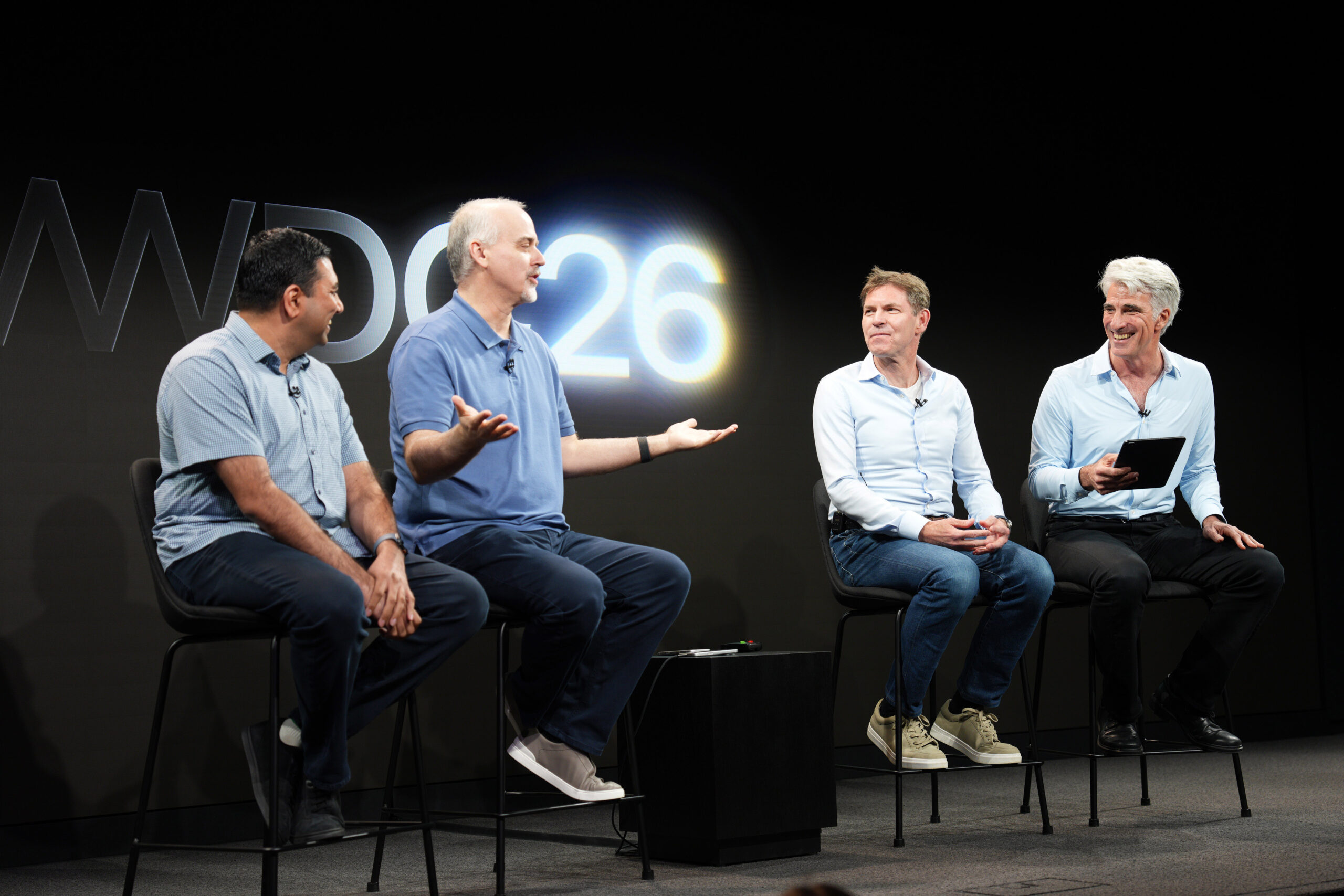
Photo: Claims Journal
Apple has revealed its most ambitious artificial intelligence initiative yet, showcasing a dramatically upgraded Siri and a new generation of AI models that rely on technology partnerships with Google and Nvidia. The announcement, made during the company's Worldwide Developers Conference (WWDC), offers the clearest look so far at Apple's evolving AI strategy and highlights how the iPhone maker is approaching the industry's most competitive technological race.
While rivals such as OpenAI, Google, Microsoft, Anthropic, and Meta continue investing tens of billions of dollars into massive AI infrastructure projects, Apple is taking a different route. Instead of competing solely on model size and computing scale, the company is positioning privacy, personalization, and seamless device integration as its key advantages.
Behind the scenes, however, Apple's latest AI ambitions are being supported by some of the biggest names in artificial intelligence and semiconductor technology.
A New Era for Siri
The centerpiece of Apple's AI presentation was a significantly redesigned Siri that aims to transform the digital assistant into a more natural and capable companion.
The upgraded version can maintain conversational context, understand complex requests, and perform multiple tasks across apps and services. During demonstrations, Siri was shown helping users manage event planning, retrieve information, schedule reminders, coordinate transportation, and interact with applications more fluidly than previous versions.
The improvements represent one of the biggest overhauls in Siri's history. Originally introduced in 2011, Siri was among the first mainstream voice assistants but gradually fell behind competitors as generative AI technologies advanced rapidly over the past few years.
Apple's latest redesign seeks to close that gap while integrating AI more deeply across the company's ecosystem of devices and services.
Apple's AI Philosophy Differs From Silicon Valley Rivals
Unlike many competitors that have focused heavily on building ever-larger models and data centers, Apple continues to emphasize a user-centric approach.
Company executives stressed that artificial intelligence should serve practical purposes rather than exist simply as a demonstration of technological capability.
Apple's strategy centers on creating AI experiences that feel useful, secure, and deeply integrated into everyday workflows. Rather than sending every request to cloud servers, Apple aims to process as much information as possible directly on users' devices.
This approach reduces latency, improves responsiveness, and minimizes the amount of personal information that leaves the device.
The company believes this model gives it a competitive advantage at a time when consumers are increasingly concerned about data privacy and digital security.
The Surprising Role of Google and Nvidia
One of the most significant revelations from Apple's presentations was the extent of its collaboration with Google and Nvidia in developing its most advanced AI systems.
Apple executives disclosed that the company's flagship cloud-based model, known as Apple Foundation Model Cloud Pro (AFM Cloud Pro), benefits from technologies provided by both companies.
According to Apple, AFM Cloud Pro delivers performance comparable to Google's most advanced frontier AI models while operating within Apple's privacy-focused infrastructure framework.
The announcement marks the first official confirmation that certain Apple Intelligence features will utilize Nvidia graphics processing units as part of Apple's cloud computing infrastructure.
Nvidia's AI accelerators have become the industry standard for training and running advanced artificial intelligence systems, powering many of the world's leading AI models.
By incorporating Nvidia hardware into its architecture, Apple gains access to some of the most powerful computing resources available while maintaining its own software and privacy controls.
How Apple's Cloud AI Infrastructure Works
Apple's cloud strategy differs substantially from traditional AI deployments.
Rather than relying on conventional cloud services where providers may have visibility into data processing, Apple has developed what it calls Private Cloud Compute, an architecture designed to extend the company's privacy principles beyond the device itself.
The system enables complex AI requests to be processed in the cloud while limiting access to user information.
According to Apple executives, recent advances in confidential computing technologies made it possible to deploy Nvidia-powered infrastructure while maintaining strict privacy requirements.
The architecture was specifically engineered so that cloud operators cannot access or inspect user data being processed by AI models.
This capability allows Apple to deliver more powerful AI features without abandoning its longstanding privacy commitments.
The System Orchestrator: Apple's AI Traffic Controller
A critical component of Apple's new AI framework is a software layer known internally as the system orchestrator.
This technology functions as the decision-making hub for Apple Intelligence, determining where and how AI requests should be processed.
When a user submits a query, the orchestrator evaluates factors such as computational complexity, privacy sensitivity, and available resources before deciding whether the task should run locally on the device or through cloud-based models.
Simple requests may be handled entirely on-device using Apple Silicon chips, while more advanced tasks can be routed to larger cloud models.
The process occurs automatically and is designed to be invisible to users.
Apple views this architecture as essential to balancing AI performance with privacy protection.
Custom-Built Models Trained with Google's Assistance
Apple executives also provided new details about the relationship between Apple Intelligence and Google's AI technologies.
Contrary to widespread assumptions following the companies' earlier partnership announcement, Apple Intelligence does not simply use the same Gemini models available to the public.
Instead, Apple has developed its own family of proprietary AI models optimized specifically for Apple hardware and software environments.
These models were trained using Apple's datasets, refined through reinforcement learning techniques, and enhanced with outputs generated by Google's frontier AI systems.
The result is a collection of AI models tailored for Apple's ecosystem rather than generic third-party solutions.
This approach allows Apple to maintain greater control over model behavior, performance optimization, privacy safeguards, and integration across devices.
Four Core Models Power Apple's AI Ecosystem
Apple's AI framework now revolves around multiple specialized foundation models designed for different workloads.
These include lightweight on-device models capable of running directly on iPhones, iPads, and Macs, as well as larger cloud-based systems intended for more demanding tasks.
The company's architecture includes dedicated models for text generation, reasoning, advanced cloud processing, and image creation.
Each model is optimized to operate efficiently within Apple's hardware ecosystem while maintaining compatibility across the broader Apple Intelligence platform.
This modular approach enables Apple to deliver sophisticated AI capabilities without relying exclusively on a single massive model.
Privacy Remains Apple's Central Selling Point
Throughout WWDC, Apple repeatedly emphasized privacy as the defining characteristic of its AI strategy.
While competitors often rely on collecting large amounts of user data to improve model performance, Apple is attempting to leverage information already stored on users' devices in a secure and controlled manner.
This allows Apple Intelligence to deliver highly personalized experiences based on calendars, messages, photos, emails, reminders, and other personal data without broadly sharing that information with external systems.
The company argues that this combination of personalization and privacy creates a distinct competitive advantage in the AI era.
For consumers increasingly concerned about how their data is used, Apple hopes this approach will become a major differentiator.
The Growing AI Arms Race
Apple's latest announcements come during an unprecedented period of investment and competition across the artificial intelligence sector.
Major technology companies are collectively spending hundreds of billions of dollars on AI infrastructure, specialized chips, research, and product development.
Microsoft continues expanding its partnership with OpenAI. Google is aggressively scaling Gemini. Meta is investing heavily in open-source AI development. Amazon is building AI services across its cloud platform. Nvidia remains at the center of nearly every major AI initiative due to overwhelming demand for its processors.
Against this backdrop, Apple is pursuing a more measured strategy focused on integrating AI into products already used by billions of people worldwide.
With more than two billion active Apple devices globally, the company has a unique opportunity to bring advanced AI capabilities directly to consumers at an enormous scale.
What Apple's AI Vision Means for the Future
The unveiling of Apple Intelligence signals that the company is entering a new chapter in its technology roadmap.
Rather than attempting to win the AI race solely through larger models or bigger infrastructure investments, Apple is betting that privacy, seamless integration, and personalized experiences will ultimately matter more to users.
Its collaborations with Google and Nvidia demonstrate a willingness to leverage industry-leading technologies while maintaining control over the user experience.
The result is a hybrid strategy that combines Apple's hardware expertise, Google's AI advancements, and Nvidia's computing power into a unified ecosystem designed around consumer trust.
As artificial intelligence becomes increasingly embedded into everyday computing, Apple's latest initiatives suggest the company intends not merely to participate in the AI revolution but to shape how billions of people interact with it in the years ahead.
.webp)
Popular articles



Subscribe to unlock premium content
Boutique Creative Studios Turning Local Art Movements into Ad Campaigns

Inside London’s Private Wealth Advisory Firms Catering to Millennial Investors

How Boutique Safari Camps in Kenya Are Creating Premium Eco Experiences

Boutique Creative Studios Turning Local Art Movements into Ad Campaigns
Inside London’s Private Wealth Advisory Firms Catering to Millennial Investors
Boutique Creative Studios Turning Local Art Movements into Ad Campaigns