Amazon–USPS Deal Breaks Down as Contract Talks Collapse Ahead of Deadline

Amazon–USPS Deal Breaks Down as Contract Talks Collapse Ahead of Deadline
By
Junia Wells
Last updated:
March 19, 2026
First Published:
March 19, 2026

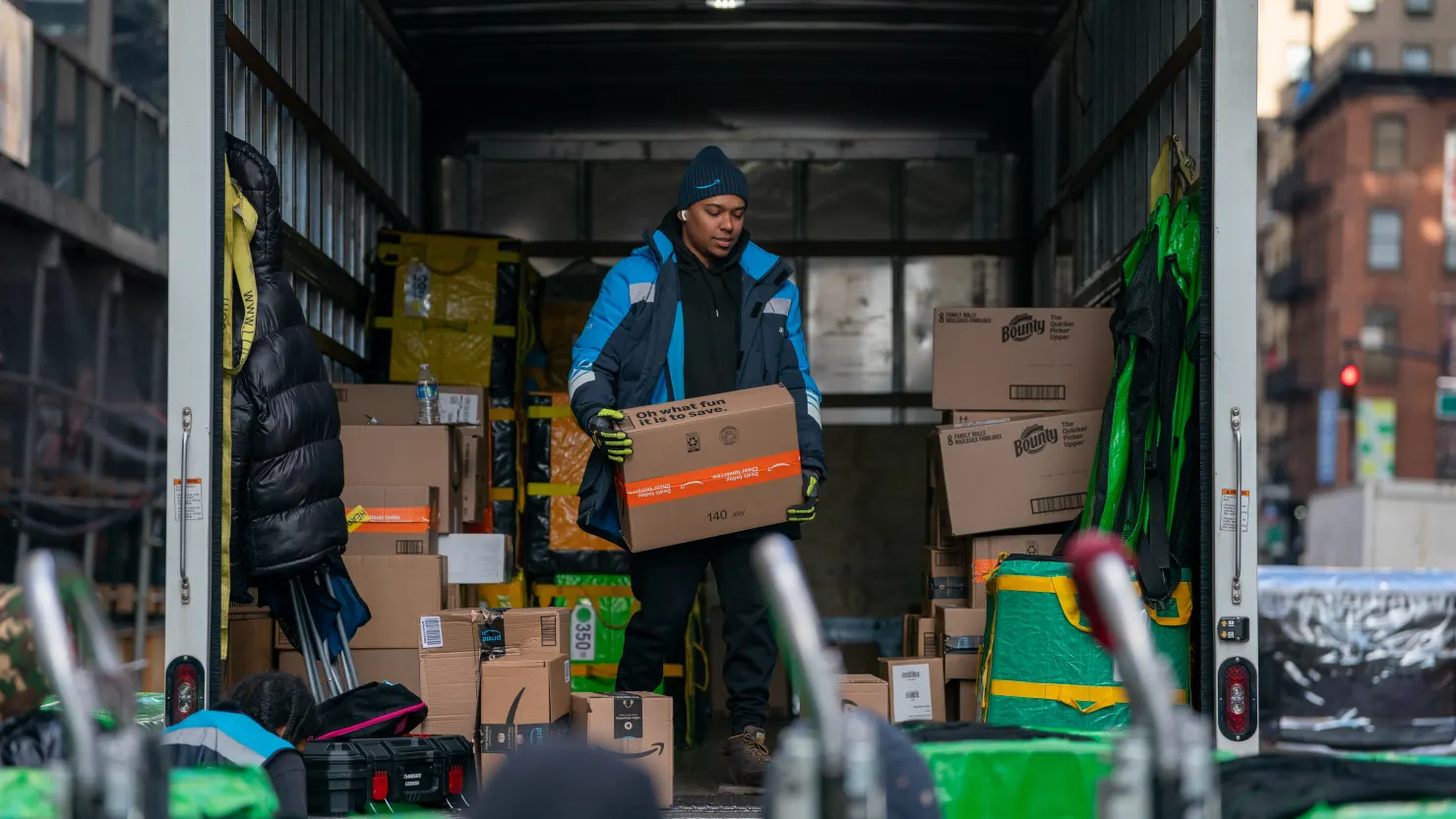
An Amazon worker unloads packages in New York, Nov. 29, 2024.
David Dee Delgado | Getty Images
Breakdown in High-Stakes Negotiations
Amazon has revealed that its contract renewal discussions with the United States Postal Service came to an unexpected halt late last year, with the company stating that USPS “walked away at the eleventh hour.”
The collapse of talks has raised significant concerns across the logistics and e-commerce sectors, given the scale of the partnership. Amazon has historically been the Postal Service’s largest customer, accounting for a substantial portion of its package delivery volume.
Billions in Deliveries at Stake
According to industry estimates, Amazon relies on USPS for approximately 1.7 billion package deliveries annually. Reports suggest that without a renewed agreement, Amazon could reduce its reliance on USPS by as much as two-thirds once the current contract expires at the end of September.
Such a shift would represent one of the largest realignments in U.S. logistics networks in recent years, potentially impacting revenue streams for USPS and delivery times for Amazon customers, particularly in less densely populated areas.
Amazon Signals Willingness to Continue Partnership
Despite the breakdown, Amazon maintains that its objective was to expand—not reduce—its collaboration with USPS. The company stated it had been negotiating for over a year in pursuit of a long-term agreement aimed at increasing delivery volumes.
Following the failed talks, Amazon has submitted a new bid under USPS’s recently introduced auction-based contracting system, signaling its continued interest in maintaining at least part of the relationship. The company has also sought direct engagement with Postmaster General David Steiner in an effort to revive discussions.
USPS Financial Pressure and Strategic Shift
The Postal Service, meanwhile, is undergoing a significant transformation as it grapples with financial challenges. Officials have warned that without structural changes or congressional support, the agency could face liquidity issues within the next year.
As part of its strategy to improve financial sustainability, USPS launched a new last-mile delivery bidding platform in December. The initiative is expected to generate billions in revenue by opening up contracts to competitive bidding, rather than relying on legacy agreements.
This shift may explain the breakdown in negotiations, as USPS seeks to optimize pricing and operational efficiency across its delivery network.
Amazon’s Expanding Logistics Empire
Over the past decade, Amazon has aggressively invested in building its own logistics infrastructure, reducing its dependence on third-party carriers. The company now operates a vast network that includes cargo aircraft, trucking fleets, fulfillment centers, and thousands of independent last-mile delivery partners.
It also works with major carriers such as FedEx and UPS, though its internal capabilities increasingly handle a majority of deliveries.
A key focus area for Amazon is rural expansion. The company has committed approximately $4 billion by 2026 to triple the size of its delivery network in small towns and remote regions—areas traditionally dominated by USPS due to higher costs and lower population density.
What This Means for the Future of Delivery
The potential scaling back of Amazon’s USPS usage could have wide-ranging implications. For USPS, losing a significant portion of Amazon’s volume could pressure revenues at a time when the agency is already facing financial strain.
For Amazon, the move would accelerate its transition toward a more self-reliant logistics model, giving it greater control over costs, delivery speeds, and customer experience.
A Critical Turning Point for Both Sides
The breakdown in negotiations marks a pivotal moment in one of the most important partnerships in U.S. logistics. While both sides appear open to continued engagement, the window for reaching a mutually beneficial agreement is narrowing.
As the contract deadline approaches, the outcome of these discussions will shape not only the future of Amazon’s delivery strategy but also the financial and operational trajectory of the Postal Service in an increasingly competitive logistics landscape.
.webp)
Popular articles



Subscribe to unlock premium content
Sipping Sophistication in the Heart of New York

Clay Escapes for the Modern Elite

Tiny Masterpieces Big Experiences

Sipping Sophistication in the Heart of New York
Clay Escapes for the Modern Elite
Sipping Sophistication in the Heart of New York