AI Spending Frenzy Pushes SK Hynix Into Trillion-Dollar Territory as Chip Stocks Surge

AI Spending Frenzy Pushes SK Hynix Into Trillion-Dollar Territory as Chip Stocks Surge
By
Rachel Steinberg
Last updated:
May 27, 2026
First Published:
May 27, 2026

Getty Images
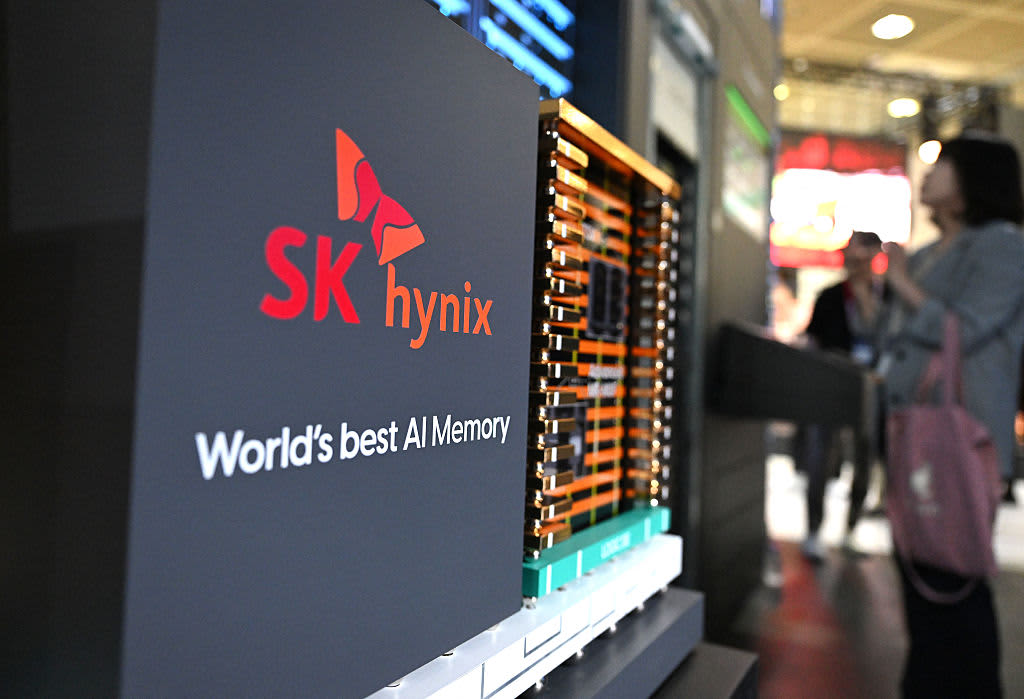
The artificial intelligence boom is continuing to reshape global markets, and South Korea’s semiconductor industry is becoming one of the biggest beneficiaries. SK Hynix has reached a major milestone after its market valuation surged past the trillion-dollar level, driven by aggressive investor demand for companies at the center of the AI revolution.
The rally highlights how rapidly global capital is shifting toward businesses tied to artificial intelligence infrastructure. From cloud computing and data centers to AI accelerators and advanced memory technology, investors are increasingly betting that the next phase of technological growth will be powered by semiconductor leaders.
SK Hynix now finds itself at the heart of that movement.
AI Demand Sends SK Hynix Shares Soaring
Shares of SK Hynix surged by as much as 11% during trading, extending one of the most remarkable stock rallies seen in the technology sector this year.
The company's stock price has climbed roughly 250% since the beginning of the year, dramatically outperforming many major global technology names.
The rise pushed the semiconductor giant's market capitalization above the trillion-dollar threshold, placing it among an increasingly exclusive group of technology companies reaching massive valuations.
The move reflects investor confidence that AI-related chip demand is still in its early growth phase.
Global spending on artificial intelligence infrastructure has accelerated sharply as technology companies race to expand computing power and build next-generation AI systems.
Major cloud providers and technology firms continue investing billions of dollars into:
• AI servers
• Large-scale data centers
• Machine learning systems
• Advanced semiconductor technologies
• High-performance computing infrastructure
This wave of spending is directly benefiting memory manufacturers like SK Hynix.
High-Bandwidth Memory Has Become One of AI’s Most Important Technologies
The rise of SK Hynix is closely tied to one critical product category: high-bandwidth memory, commonly called HBM.
Unlike traditional memory products, HBM chips are designed to process and transfer enormous amounts of information at extremely high speeds while consuming less power.
These chips have become essential components in artificial intelligence systems because AI models require massive volumes of data to move rapidly between processors.
HBM technology is now widely used in:
• AI accelerators
• Data center servers
• Advanced graphics processors
• Machine learning systems
• High-performance computing applications
As AI models become larger and more complex, demand for advanced memory solutions continues increasing.
Industry forecasts suggest the global AI semiconductor market could expand significantly over the coming years as businesses continue integrating artificial intelligence into products and services.
Strong Ties to AI Supply Chains Strengthen SK Hynix's Position
SK Hynix has established itself as one of the most important suppliers within the global AI ecosystem.
The company plays a critical role in providing advanced memory products used alongside AI processors and computing systems.
Its growing position in the broader semiconductor supply chain has transformed investor perception of the company from a traditional memory manufacturer into a strategic AI infrastructure player.
That shift has significantly boosted valuation expectations.
Investors increasingly view companies supporting the AI ecosystem not simply as hardware manufacturers but as long-term growth businesses benefiting from one of the biggest technological shifts in decades.
Samsung Also Joins the Trillion-Dollar Club
SK Hynix's surge follows another major milestone for South Korea's technology sector.
Domestic competitor Samsung Electronics recently crossed the same trillion-dollar valuation mark after its own strong rally.
Samsung shares gained more than 6% during trading, reflecting broader investor enthusiasm surrounding semiconductor stocks.
Together, SK Hynix and Samsung represent the dominant forces within South Korea's technology landscape.
The two companies account for more than 40% of the country's benchmark Kospi index.
Their growing influence means the performance of South Korea's stock market is increasingly tied to the global semiconductor cycle and AI investment trends.
South Korea's Stock Market Is Becoming More Concentrated
The rapid rise in semiconductor valuations has had a major impact on South Korea's broader market.
The Kospi index has nearly doubled since the beginning of the year, fueled heavily by gains in technology and chip-related stocks.
While the surge has created strong returns for investors, it has also introduced new concerns.
Market concentration can increase vulnerability because a small number of companies begin carrying an outsized share of overall performance.
Potential risks include:
• Supply chain disruptions
• Slower AI infrastructure spending
• Changes in semiconductor demand
• Global economic weakness
• Increased competition in memory markets
If growth expectations change suddenly, markets heavily dependent on a few sectors can experience sharper volatility.
Analysts Say Growth May Still Have Room to Continue
Despite the dramatic rally, some analysts believe the semiconductor boom may not be over.
One reason is that earnings forecasts for major AI-related chip companies have continued rising rapidly.
In some cases, projected profits are increasing faster than stock prices themselves.
This creates an unusual situation where valuations can appear more attractive even after substantial gains.
The reasoning is relatively simple.
If company earnings continue expanding at a pace greater than share price appreciation, valuation metrics can remain supported despite strong market performance.
Many investors therefore believe the current AI cycle could still have significant growth potential.
The AI Race Is Reshaping Global Semiconductor Markets
The rise of SK Hynix reflects more than just a strong stock performance.
It signals a larger shift taking place across the global technology industry.
Artificial intelligence is no longer being viewed as a niche sector. It is increasingly becoming the foundation for future growth across industries ranging from healthcare and finance to cloud computing and consumer technology.
As demand for computing power expands, the companies supplying the critical components behind that infrastructure are emerging as some of the biggest winners.
For South Korea, that transformation is becoming increasingly important.
For investors, it serves as another reminder that the semiconductor industry has moved from being a cyclical technology sector to becoming one of the central pillars of the global AI economy.
.webp)
Popular articles



Subscribe to unlock premium content
Hidden Masterpieces Behind Office Doors

Interactive Serialized Podcasts Revolutionize Storytelling

Worldly Indulgence Delivered to Your Door

Hidden Masterpieces Behind Office Doors
Interactive Serialized Podcasts Revolutionize Storytelling
Hidden Masterpieces Behind Office Doors