AI Chip Startup Rebellions Secures $400 Million to Fuel U.S. Expansion and IPO Plans

AI Chip Startup Rebellions Secures $400 Million to Fuel U.S. Expansion and IPO Plans
By
Leah Rosenfeld
Last updated:
March 31, 2026
First Published:
March 31, 2026

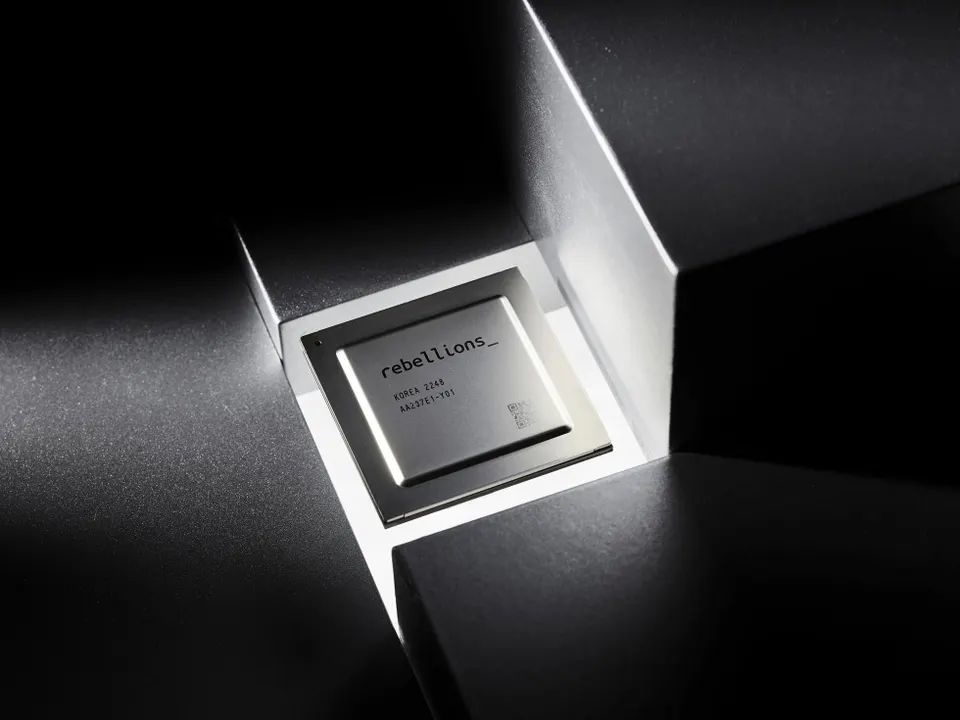
Photo: Forbes
Major Funding Boost Signals Rising AI Chip Race
South Korea’s fast-growing semiconductor startup Rebellions has raised $400 million in fresh capital, underscoring intensifying global competition in artificial intelligence hardware. The funding round values the company at approximately $2.34 billion, positioning it as one of Asia’s most promising AI chip players ahead of a planned public listing.
The investment was led by Mirae Asset Financial Group and the Korea National Growth Fund, reflecting both private and state-backed confidence in the country’s semiconductor ambitions.
Expansion Strategy Focused on the U.S. Market
Rebellions plans to deploy the newly raised capital to accelerate its expansion into the United States, one of the most competitive and lucrative markets for AI infrastructure.
CEO Sunghyun Park emphasized that the company is targeting leading AI research labs and innovators rather than traditional hyperscale cloud providers. Potential customers include major players such as Meta and xAI.
The company is already conducting proof-of-concept trials with U.S.-based clients, signaling early traction in a market dominated by established giants.
IPO Plans Take Shape
Alongside its expansion efforts, Rebellions is actively preparing for an initial public offering, although details regarding timing and listing location remain undisclosed.
The move aligns with a broader trend of AI infrastructure companies tapping public markets to fund large-scale growth, as demand for computing power continues to surge globally.
Betting Big on AI Inference Chips
Rebellions is carving out a niche in AI inferencing—an increasingly critical segment of the AI ecosystem. Unlike training, which involves building large models, inferencing focuses on deploying those models in real-world applications, requiring speed, efficiency, and lower energy consumption.
This strategic focus places Rebellions in direct competition with industry leader Nvidia, as well as emerging challengers like Cerebras and Groq.
The company’s flagship product, built around its Rebel100 neural processing unit, is designed to deliver high performance while significantly reducing power consumption—an increasingly important factor as data centers face rising energy costs.
Supply Chain Challenges and Memory Bottlenecks
Despite strong demand, Rebellions faces a key industry-wide constraint: access to memory chips. High-performance memory is essential for AI workloads, yet global supply remains tight due to surging demand.
Major suppliers such as Samsung Electronics, SK Hynix, and Micron Technology are struggling to keep pace, pushing prices higher and creating bottlenecks across the sector.
However, Rebellions may hold a strategic advantage. With Samsung and SK Hynix among its investors, the company is better positioned than many competitors to secure critical memory supply in a constrained market.
South Korea’s Strategic Push into AI Chips
Rebellions is also a key component of South Korea’s broader effort to strengthen its domestic semiconductor ecosystem. The government has been actively promoting initiatives aimed at developing a “K-Nvidia”—a national champion capable of competing on the global stage.
The Korea National Growth Fund alone contributed around 250 billion won (approximately $166 million) in this latest round, highlighting the scale of public investment flowing into next-generation chip design.
In addition to domestic backing, the company has attracted international investors, including energy giant Saudi Aramco, further reinforcing its global ambitions.
Positioned for the Next Phase of AI Growth
As artificial intelligence adoption accelerates across industries, the demand for efficient, scalable, and cost-effective computing solutions is rising sharply. While much of the spotlight has been on training large AI models, inferencing is emerging as the next major battleground.
Rebellions’ focus on this segment, combined with strong financial backing and strategic partnerships, positions it to play a significant role in the evolving AI hardware landscape.
With fresh capital in hand and IPO plans on the horizon, the company is now entering a critical phase—one that could determine whether it becomes a serious global contender in the race to power the future of AI.
.webp)
Popular articles



Subscribe to unlock premium content
Zara’s Hyper-Fast Fashion Supply Chain Is Changing Global Retail

The Rise of Apple Stores as Experiential Brand Centers Worldwide

Boutique Eco-Lodges in Costa Rica Redefining Ultra-Luxury Travel

Zara’s Hyper-Fast Fashion Supply Chain Is Changing Global Retail
The Rise of Apple Stores as Experiential Brand Centers Worldwide
Zara’s Hyper-Fast Fashion Supply Chain Is Changing Global Retail